
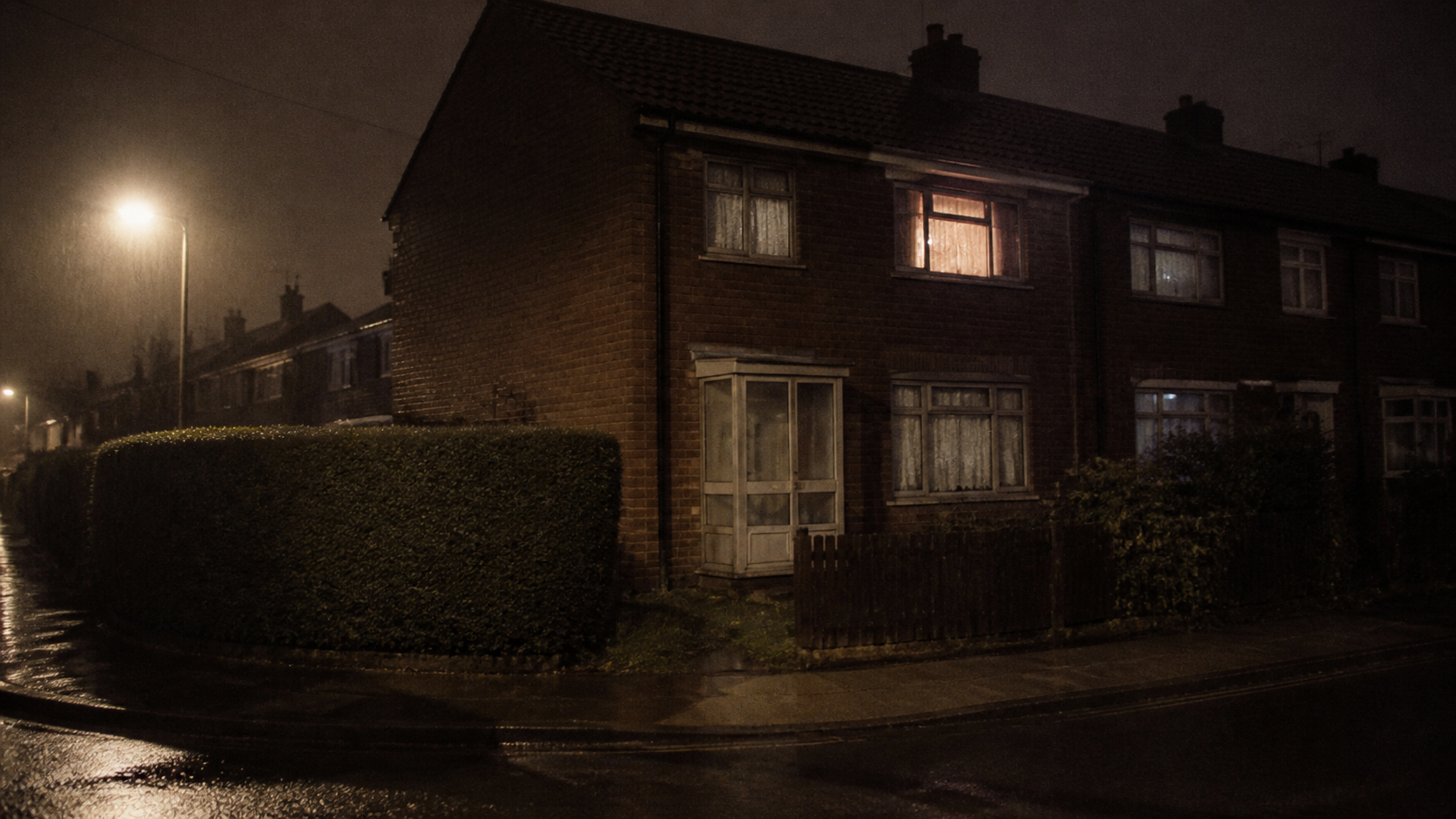
In late August 1977, an ordinary council house in Enfield, North London, became the centre of a haunting that still divides investigators. The Enfield Poltergeist began with frightened children, unexplained knocking and a heavy chest of drawers that the family said moved by itself. Soon, police officers, reporters and psychical researchers were standing in the same cramped rooms, waiting for the next sound to break the silence.
The case is frightening because it never settles into a simple ghost story. Witnesses described furniture moving and objects flying. Recordings preserved a harsh voice that appeared to come from an 11-year-old girl. Yet investigators also caught the children playing tricks, while later critics argued that poor controls allowed ordinary mischief to become a national sensation. What happened at the Hodgson home remains caught between testimony, performance and something its witnesses believed they could not explain.
The first nights at the Hodgson house
Peggy Hodgson lived with her four children in a modest home on Green Street in Ponders End. On the night of 30 August 1977, daughters Margaret and Janet complained that their beds were shaking and that a shuffling noise was moving through their room. Peggy initially suspected childish play. The following night, however, the family heard knocks and reported that a chest of drawers shifted across the floor.
Neighbours came inside, but they could not identify a source for the sounds. Police were called. One officer, Carolyn Heeps, later stated that she saw a chair move several feet without anyone touching it. Her account is among the case’s best-known pieces of testimony, although an observation made in a dark, crowded room does not establish what caused the movement.
| Period | Documented development |
|---|---|
| August 1977 | The Hodgsons report shaking beds, knocks and moving furniture. |
| September 1977 | The Daily Mirror covers the story and contacts the Society for Psychical Research. |
| Late 1977 to 1978 | Maurice Grosse and Guy Lyon Playfair record alleged incidents, voices and witness accounts. |
| By 1979 | Reports diminish, leaving disputed recordings, photographs and testimony. |
When the knocking drew a crowd
The story might have remained a neighbourhood mystery if the family had been its only source. Instead, Daily Mirror reporter Douglas Bence and photographer Graham Morris visited the house. Morris said toy bricks flew through the living room and that one struck him. BBC cameras also entered the property. A surviving BBC Nationwide report broadcast on 23 November 1977 shows how quickly the small home became a public investigation.
That attention changed the atmosphere. Every visitor brought another expectation, while every unexplained knock created a new headline. The family was under intense scrutiny, but the house never became a controlled laboratory. People moved between rooms, children were not continuously observed, and investigators often arrived after an alleged event had already occurred.
The Enfield Poltergeist investigation
The Society for Psychical Research sent Maurice Grosse, who was later joined by writer and investigator Guy Lyon Playfair. They spent long periods at the property, interviewed witnesses and made many hours of audio recordings. Their work forms the core of the case that survives today. The SPR’s account of the Enfield Poltergeist presents both the reported phenomena and the criticism directed at the investigation.
Grosse and Playfair believed at least some events could not be dismissed as tricks. They described knocks apparently answering questions, objects moving under observation and Janet being thrown or lifted from her bed. Photographs of Janet airborne became famous, but they are ambiguous still images. A child jumping from a mattress can produce a similar frozen pose, and the photographs do not reveal what happened immediately before or after each frame.
The large archive matters, but quantity is not the same as proof. The SPR archive records tapes donated by Grosse and Playfair, giving researchers more material than exists for many haunting stories. Even so, recordings preserve sounds and reactions, not necessarily their cause.
The voice called Bill
The most disturbing phase centred on a coarse male voice associated with Janet. It identified itself as Bill and made claims about having died in the house. In recordings, the sound is strained, guttural and startlingly unlike the girl’s usual speech. To listeners who accept the haunting, it seems to give the disturbance a personality. To sceptics, it is one of the clearest signs of performance.
Investigators debated how Janet produced the voice and whether she could sustain it without injury. Critics proposed ventriloquism or the use of structures above the normal vocal folds. More importantly, no independent evidence established that the speaker was a dead former resident. A frightening voice in a room is evidence that a voice was heard. It does not, by itself, identify who or what created it.
Tricks inside a supposedly haunted home
Any honest account must confront the fact that the children sometimes deceived observers. Janet later acknowledged that she and Margaret staged some incidents. Playfair himself did not accept every claim. Sceptical SPR investigators Anita Gregory and John Beloff were unconvinced, and Gregory considered aspects of the girls’ behaviour suspicious.
That admission damages the case, but it does not automatically explain every report. Believers argue that tricks were a response to pressure or an attempt to keep adults interested after real disturbances had begun. Sceptics answer that once deliberate fabrication is established, each event requires stronger independent verification. Most alleged phenomena occurred in a home filled with distractions, not under repeatable conditions.
A detailed Skeptical Inquirer assessment argues that credulous observation and opportunities for misdirection explain the case better than a paranormal force. The opposing interpretation rests mainly on the number and sincerity of witnesses who felt that at least a small group of incidents happened beyond the children’s reach.
What the films changed
Popular adaptations transformed Enfield into a cleaner battle between a family and a demonic presence. The real record is less orderly. Ed and Lorraine Warren were not the central investigators, and the sinister nun associated with The Conjuring 2 belongs to fiction. Grosse, Playfair and the Hodgson family occupy the historical centre of the case.
This gap between screen horror and documented history resembles the mythology surrounding the real Annabelle doll story. Cinema gives uncertainty a face and a final confrontation. The Enfield files offer neither. They leave voices on tape, contested photographs, remembered movements and incompatible interpretations.
Why the house still feels frightening
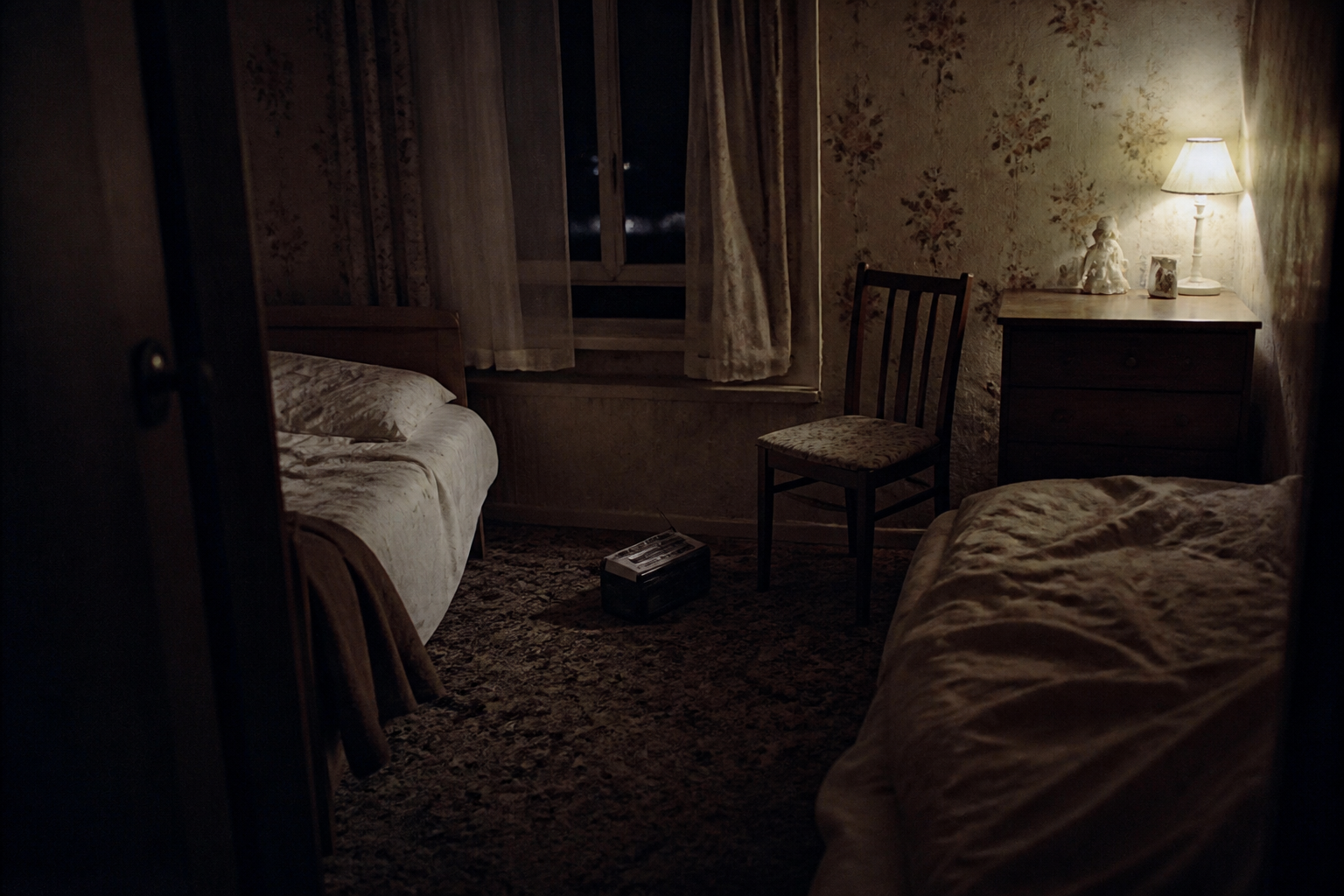
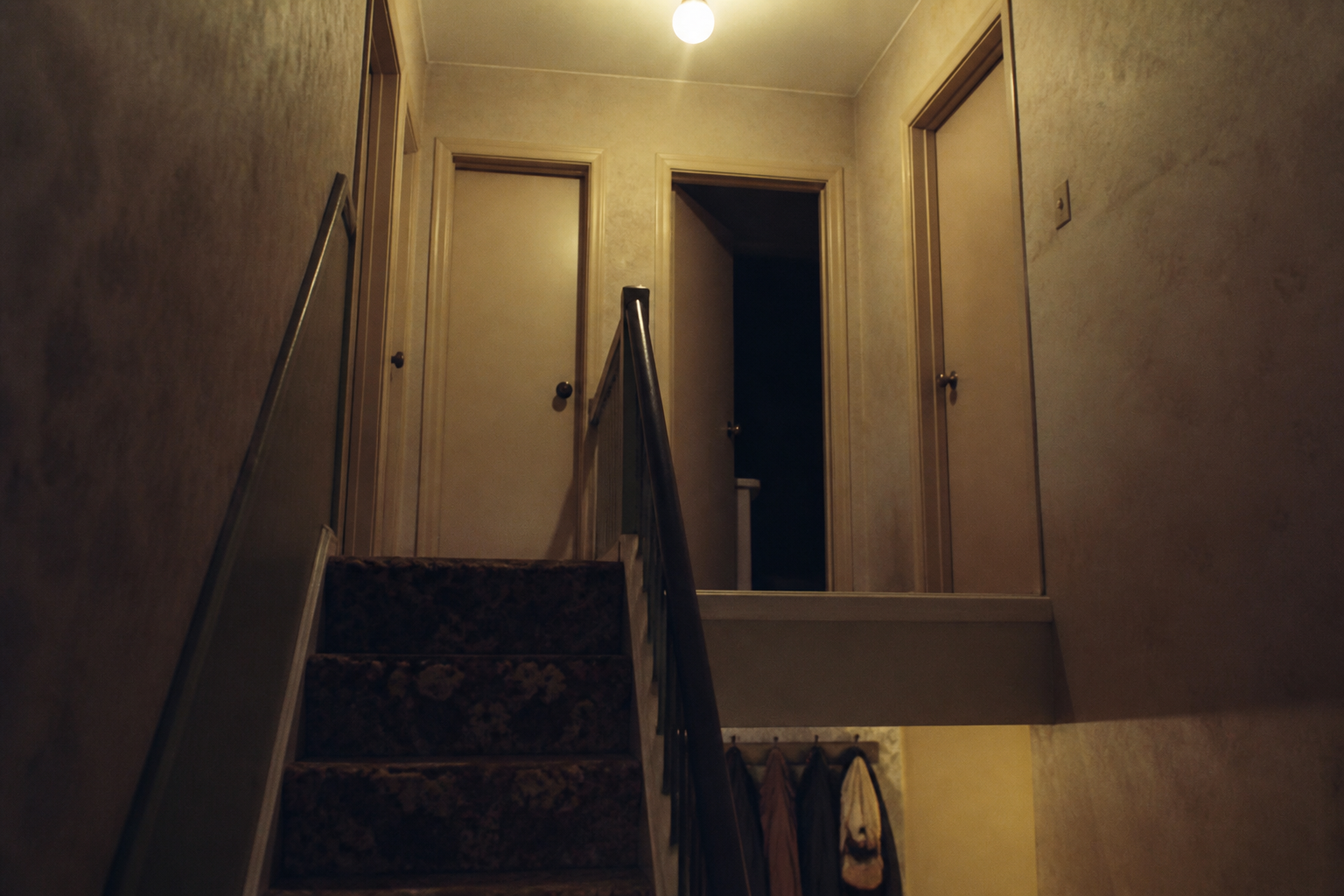
The most unsettling detail is not a spectacular image. It is the setting: a narrow staircase after midnight, a bedroom shared by children, and knocking that appears to come from a wall no one can see through. The house was ordinary enough to suggest that terror did not need an ancient ruin. Like the disputed stories around Borley Rectory, Enfield grew powerful because witnesses disagreed about what they had seen while agreeing that the atmosphere had changed.
There are also human explanations that deserve weight. Children living through family stress suddenly faced police, journalists and paranormal investigators. Attention, fear, suggestion and play could feed one another. None of those factors makes the family’s distress unreal. They make the investigation harder, because a sincere experience can coexist with exaggeration or deception.
What remains unresolved
The Enfield Poltergeist has not been proven paranormal. No recording or photograph rules out ordinary causes, and confirmed tricks prevent the testimony from being accepted without caution. Still, dismissing the entire episode with a single explanation also leaves questions about what multiple adults believed they witnessed.
The fairest conclusion is colder than either a ghost story or a complete debunking. Something happened inside the Hodgson home, but the surviving material cannot separate every genuine fear, mistaken perception and deliberate act. That uncertainty is why the case endures. The sounds stopped long ago, yet the archive still places the listener outside a dark bedroom, waiting to decide whether the next knock came from a child, an old pipe, or somewhere the evidence cannot reach.
Read next
- Examine the testimony and disputed claims behind the Borley Rectory haunting.
- Explore how a real object became a horror icon in the true Annabelle doll story.
- Enter another location shaped by testimony and fear in the Hoia Baciu Forest mystery.