
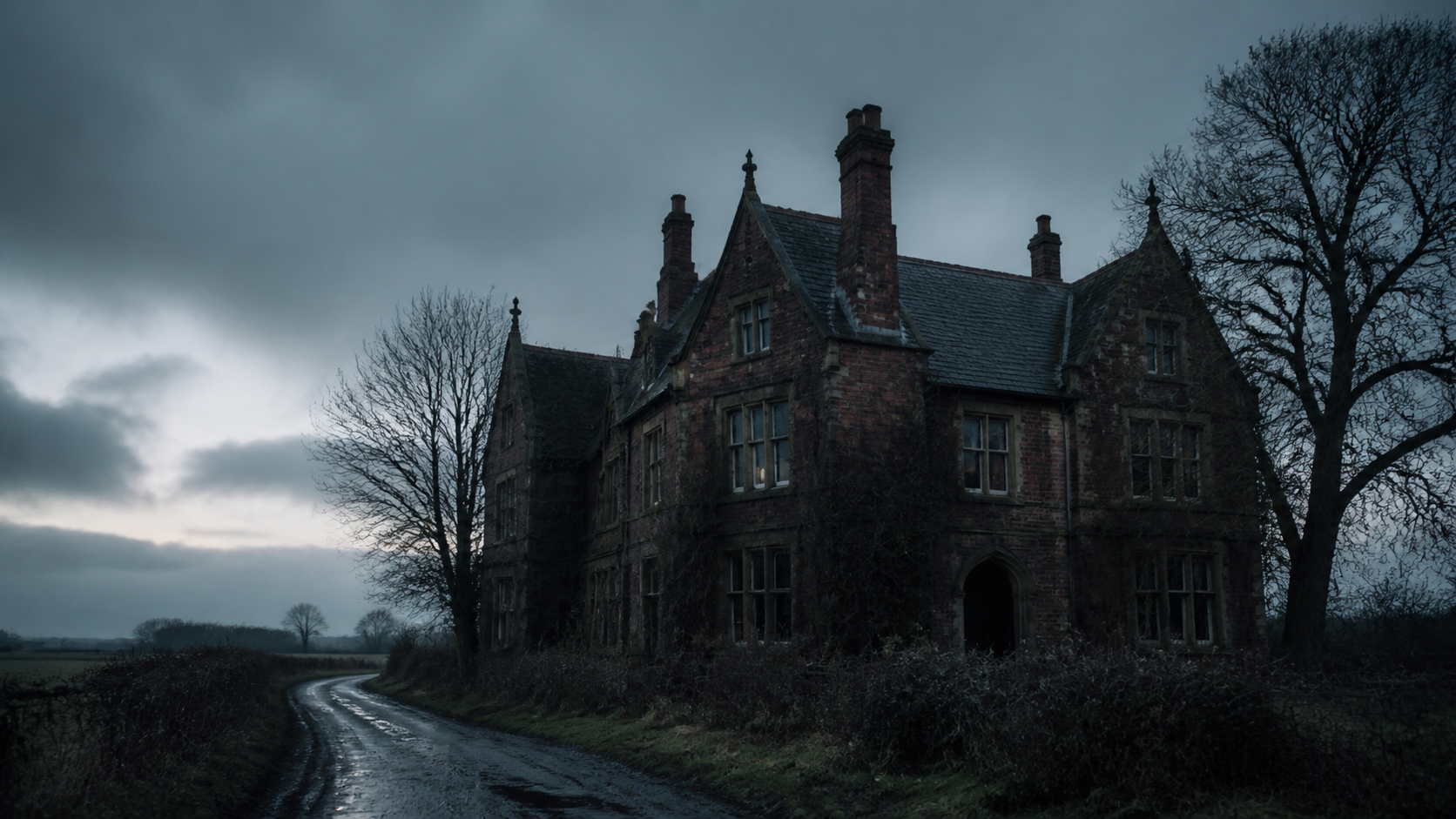
Borley Rectory no longer exists, yet its reputation has survived longer than the red-brick house itself. Built in rural Essex in 1862, damaged by fire in 1939, and demolished in 1944, the rectory became known as “the most haunted house in England.” That famous label came from psychical researcher Harry Price, whose investigations turned reports of bells, footsteps, thrown objects, and a spectral nun into an international mystery.
The unsettling truth is more complicated than the legend. Families did report strange experiences at Borley, but publicity, suggestion, weak controls, and accusations of deliberate trickery entered the story early. The case is therefore valuable not because it proves a haunting, but because it shows how a frightening local story can grow into cultural folklore while its evidence remains fiercely disputed.
Borley Rectory before the haunting
Reverend Henry Dawson Ellis Bull had Borley Rectory built in 1862 beside the parish church of St Mary. The large Victorian house served the rector and his family. Its many rooms, service passages, staircases, and uneven extensions created the kind of confusing interior where ordinary sounds could travel in unexpected ways.
Later accounts claimed the land concealed an older monastery and a tragic medieval romance involving a monk and a nun. However, historians have found no firm documentary foundation for that tale. The story became one of Borley’s most memorable images, especially after residents and visitors reported seeing a dark female figure near the house and garden. It belongs to the folklore surrounding the site, not its verified medieval history.
| Date | Documented development |
|---|---|
| 1862 | Borley Rectory was built for Reverend Henry Bull and his family. |
| 1928 | Reverend Guy Eric Smith and his wife moved into the rectory. |
| 1929 | The Smiths contacted the press, and Harry Price first investigated. |
| 1930 to 1935 | Reverend Lionel Foyster and his wife Marianne occupied the house. |
| 1937 | Price leased the empty rectory and organized a year-long observation project. |
| 1939 | A fire gutted the building. |
| 1944 | The ruins were demolished. |
| 1956 | A critical Society for Psychical Research study challenged much of Price’s case. |
How Borley Rectory reached the newspapers
The haunting entered public view after Reverend Guy Eric Smith and his wife moved into the rectory in 1928. They described unexplained footsteps, bells ringing without a visible caller, lights, and objects that seemed to move. Mrs Smith also found a human skull in the house, although its origin and connection to later claims were never established.
In 1929, the Smiths contacted the Daily Mirror, which sent a reporter and brought Harry Price to Borley. Price was already a prominent psychical researcher and an experienced student of fraudulent mediumship. During his visits, stones and other objects reportedly appeared or flew through rooms. The newspaper coverage transformed a private disturbance into a national spectacle.
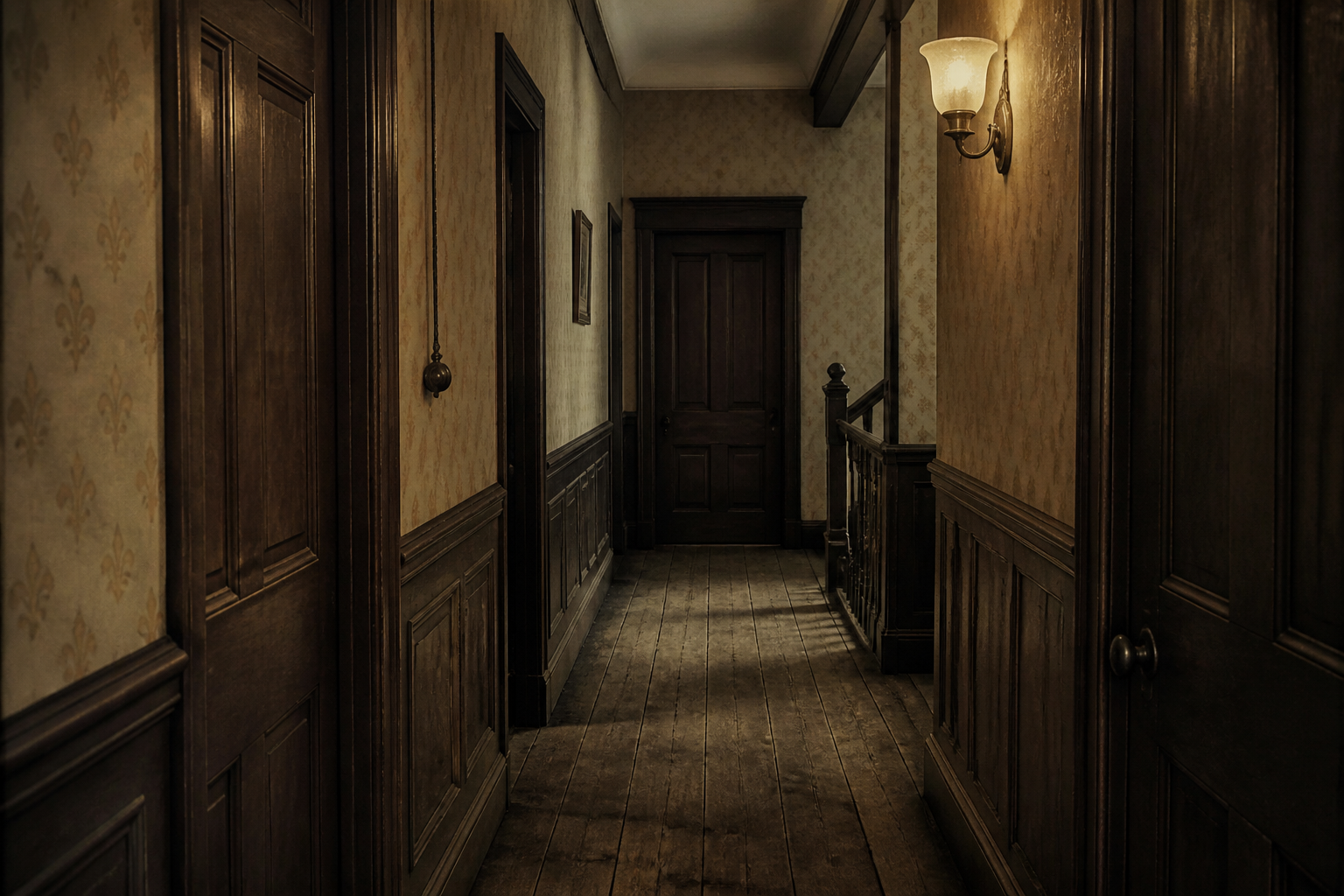
The timing matters. Claims became more dramatic while journalists and investigators were present, which increased public attention but weakened the controls needed for reliable observation. Charles Sutton, one of the reporters who visited, later accused Price of carrying stones in his pockets after Sutton was struck by one. Price’s defenders rejected the broader accusation, but the dispute has never disappeared.
The Foysters and the writing on the walls
Reverend Lionel Foyster, a relative of the Bull family, moved into Borley Rectory with his wife Marianne and their adopted daughter Adelaide in 1930. Their years in the house produced its most alarming collection of claims. The family described ringing bells, breaking glass, thrown stones, footsteps, and messages that appeared on walls. Some of the faint writing seemed to appeal directly to Marianne for help.
Yet the household was under severe strain. Lionel suffered from poor health, while Marianne’s personal life became a subject of rumor and scrutiny. Skeptics argued that some incidents could have been staged by people inside the home. Others noted that witnesses did not always agree about what happened or when. Even sympathetic researchers could not establish a secure chain of observation for the most famous phenomena.
This does not prove that every witness lied. Old buildings produce knocks, temperature shifts, animal noises, and misleading echoes, particularly at night. Fear can also make separate events feel connected. Once residents knew the rectory’s reputation, every unexplained sound arrived with a story already attached to it.
Harry Price turns a house into an experiment
After the rectory became vacant, Price leased it for a year beginning in 1937. He recruited observers through a newspaper advertisement and issued instructions for recording unusual events. The project appeared systematic, but participants had different levels of experience, and the house was already famous. Expectation could not be separated from observation.
One of the strangest episodes involved séances and a planchette. Messages allegedly predicted that the building would burn and reveal the remains of a murdered nun. A fire did destroy much of the rectory in February 1939, but it began when the new owner, Captain W. H. Gregson, knocked over an oil lamp. The coincidence strengthened the legend even though the fire had an identifiable physical cause.
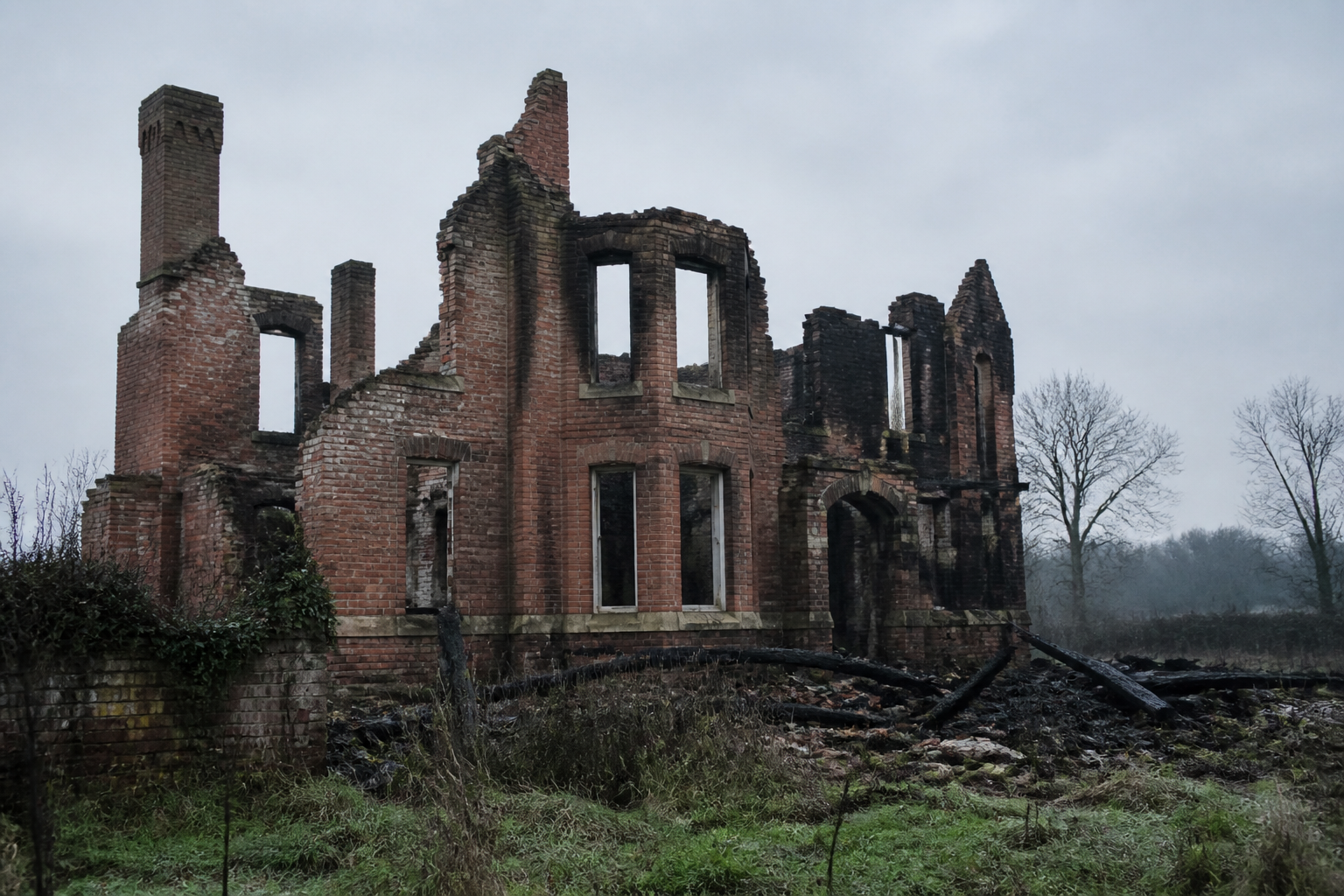
Price later excavated part of the ruins and found small bones that he believed might belong to a young woman. Their identification was contested, with local opinion reportedly favoring an animal origin. The remains were eventually buried at Liston. They did not establish the legend of the murdered nun.
What the investigation actually supports
Price published The Most Haunted House in England in 1940 and The End of Borley Rectory in 1946. His vivid storytelling fixed the rectory in popular culture. After his death, however, Society for Psychical Research members Eric Dingwall, Kathleen Goldney, and Trevor Hall re-examined the case. Their 1956 report concluded that the evidence diminished when each period was analyzed closely, and it accused Price of unreliable or fraudulent conduct.
The debate did not end there. Robert Hastings later argued that the critical report had overstated parts of its case against Price. The Society for Psychical Research’s reference history of Borley Rectory still presents the affair as contested. Its archives contain extensive correspondence, testimony, and analysis, but volume is not the same as proof.
| Claim | What can be said responsibly |
|---|---|
| A ghostly nun walked the grounds | Several sightings were reported, but the medieval nun story lacks firm historical support. |
| Bells rang by themselves | Residents reported ringing, although mechanical faults and interference were difficult to exclude. |
| Messages appeared supernaturally | The wall writing was real as writing, but no controlled evidence established a paranormal source. |
| A séance predicted the fire | A message was interpreted as predicting a fire, but the 1939 blaze followed an overturned oil lamp. |
| Human remains proved a murder | The recovered bones were disputed and did not prove the nun legend or a killing at the site. |
Why the Borley Rectory haunting still feels alive
The building’s destruction removed the one place where later investigators might have tested acoustics, bell systems, sight lines, and structural causes under better controls. What remains is an archive shaped by frightened residents, ambitious investigators, skeptical critics, and newspaper storytelling. Each group saw a different Borley.
The case also created a template that modern haunting stories still follow: an isolated old house, a tragic legend, escalating household disturbances, a charismatic investigator, disputed physical evidence, and a final catastrophe. Readers interested in how location and publicity reinforce one another can compare Borley with the documented history behind the haunted Queen Mary and the darker legends surrounding Poveglia Island.
Borley’s real power lies in uncertainty. The evidence does not justify calling the haunting proven, yet the accusations of error and trickery do not explain every private experience with equal confidence. The result is a case that feels perpetually unfinished, even though the house has been gone for more than eighty years.
What remains after the legend
Borley Rectory became famous through an unstable mixture of testimony, architecture, folklore, publicity, and investigation. Some witnesses may have sincerely experienced events they could not explain. At the same time, uncontrolled conditions, contradictions, possible pranks, and serious questions about Price prevent those stories from becoming dependable proof of ghosts.
Calling Borley “England’s most haunted house” tells us more about its cultural influence than the quality of its evidence. The rectory is gone, but the argument survives because it occupies the most disturbing space in any haunting: the distance between what people remember and what anyone can prove.
Read next
- The Haunted Queen Mary: History Beneath the Ghost Stories
- Poveglia Island: History Behind the Haunted Legend
- Hoia Baciu Forest: Legends and Reported Encounters Examined