
The Rajneeshpuram outbreak did not announce itself as an attack. It began with reports of people falling ill after eating in The Dalles, Oregon, in September 1984. Health investigators eventually linked the illnesses to restaurant salad bars. Evidence that members of a nearby commune had deliberately caused the outbreak took more than a year to assemble.
At least 751 people fell ill. What makes the case frightening is not the strangeness of the setting, but its familiarity: a meal out, an illness, and a series of apparently ordinary events that did not add up.
In this story
The first reports in The Dalles
In September 1984, Oregon health officials heard from people who had eaten at restaurants in The Dalles and fallen ill. The published investigation describes the first reports as involving two restaurants. The inquiry widened as more patients came to the attention of health officials. The final study counted at least 751 cases, while the outbreak museum records 45 hospitalizations and no deaths.
Those numbers describe different things. A case count measures the illness investigators could identify; a hospitalization count reflects only part of its cost. For a person who had simply gone out to eat, the distinction between a public health event and a crime would come much later. First came the illness, and the uncertainty over what had caused it.
How Rajneeshpuram became a political flashpoint
Rajneeshpuram grew out of a settlement established by followers of Bhagwan Shree Rajneesh at a ranch near Antelope. Historian Carl Abbott’s Oregon Encyclopedia account describes an ambitious communal project that also became embroiled in disputes over land use, incorporation and political influence. The ranch community and the town of Antelope were not the same place; the fight extended beyond both into Wasco County politics.
The City Club of Portland’s 1984 report preserves the public debate over Rajneeshpuram while the commune was still operating. It is useful precisely because the outcome was not yet known. Read alongside the later investigation, it helps distinguish disputes that were visible at the time from crimes that had not yet been established. A contentious public meeting is not evidence that every participant knew what a leadership circle was doing.
What the health investigation could establish
Investigators identified salmonellosis and linked illness to restaurant salad bars. That was an important finding, but it answered a different question from who had caused the outbreak. A patient’s account of where they ate could help locate an exposure. It could not tell an investigator whether someone had acted deliberately or identify a person responsible.
Nor did the absence of an immediate criminal finding erase what the health team had learned. Establishing that illnesses belonged to the same outbreak required comparing accounts rather than relying on the most dramatic individual story. The investigation could recognize an unusual pattern without knowing why it existed. The delay in identifying intent is one of the most uncomfortable parts of the Rajneeshpuram case: the patients were real, the cluster was real, and the ordinary explanations still had to be examined.

The evidence that changed the case
The outbreak study says that evidence linking members of Rajneeshpuram to the illnesses accumulated more than a year later. The International Outbreak Museum’s account describes a criminal investigation that found a bacterial sample matching the one associated with the outbreak. That evidence mattered because it joined a separate line of inquiry to the pattern the health investigators had already documented.
The museum attributes an electoral motive to the group responsible: they hoped illness would keep people from voting in the county election. That is an account of the perpetrators’ purpose, not evidence that they succeeded in changing the result. Abbott’s history describes the wider push for political influence falling short and several leaders facing convictions for crimes. It distinguishes those cases from Rajneesh’s own immigration plea. Neither a plea on a separate matter nor membership in the commune establishes responsibility for the poisoning.
Why the ordinary setting matters
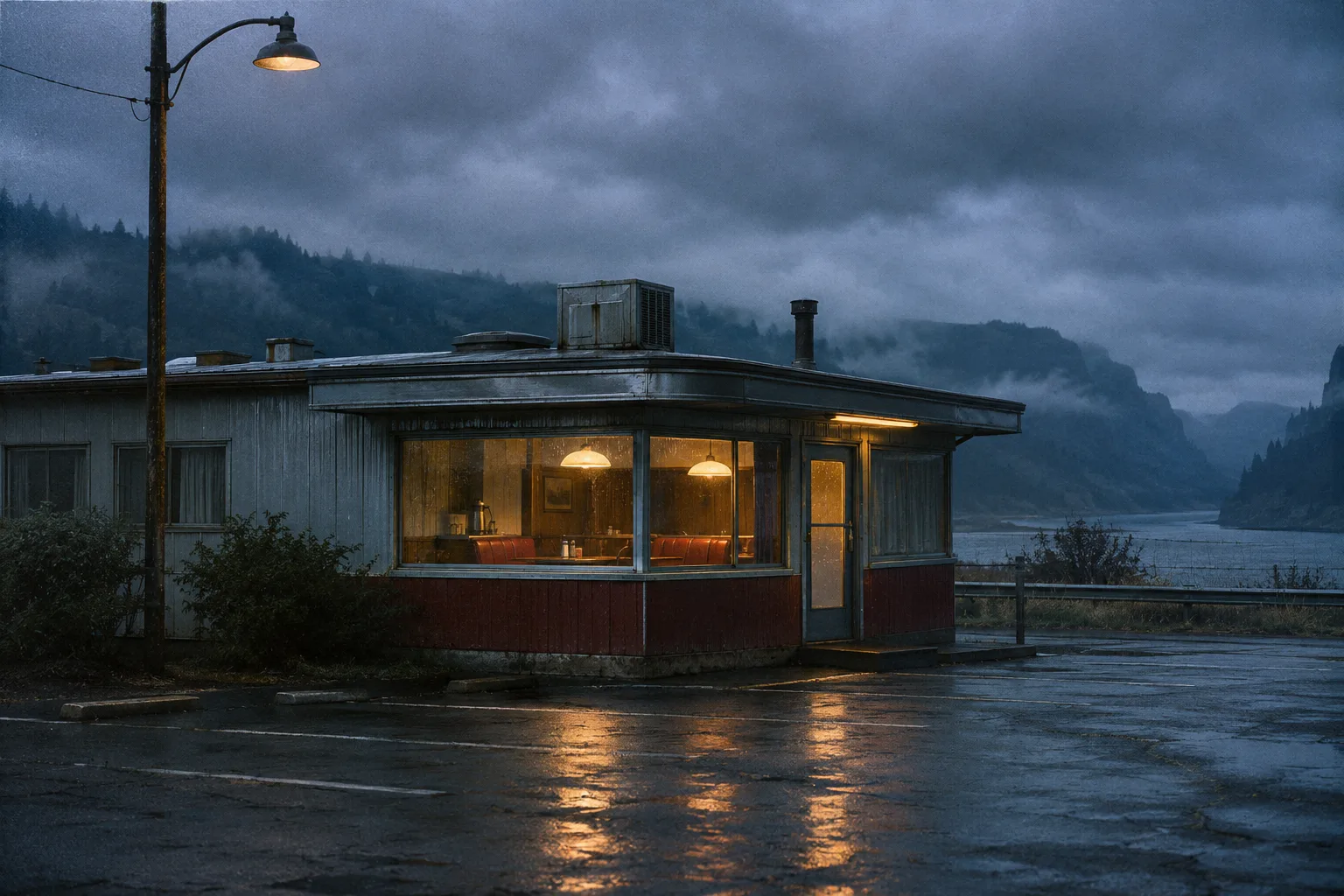
In retrospect, it is tempting to begin the story with the commune and read every illness as an obvious clue. That reverses the order in which the evidence became available. At first, the setting was not a remote compound or a secret meeting. It was a group of public restaurants where residents had expected to sit down and eat. The investigation had to work outward from those people, not backward from a villain.
Other cases in the archive show why that distinction matters. The record of Colonia Dignidad illustrates the importance of identifying specific perpetrators and the institutions that enabled them. In the Salem witch trials, allegations gained power without reliable evidence. Neither case is equivalent to Rajneeshpuram. Both make clear what is lost when suspicion and proof are treated as interchangeable.
What the Rajneeshpuram case leaves behind
The lasting horror is not that the town failed to recognize something supernatural. It is that the people who got sick had little reason to regard a routine meal as a political act. The people responsible tried to make illness do the work of persuasion, without ever asking the people affected what they believed or how they intended to vote.
The Rajneeshpuram outbreak is a case where the evidence eventually narrowed the possibilities, rather than widening them into legend. The initial records tell us how an illness appeared in a community. The later inquiry established why it was there. Keeping those two stages in view preserves the uncertainty investigators faced without mistaking it for a mystery that remains unsolved.