
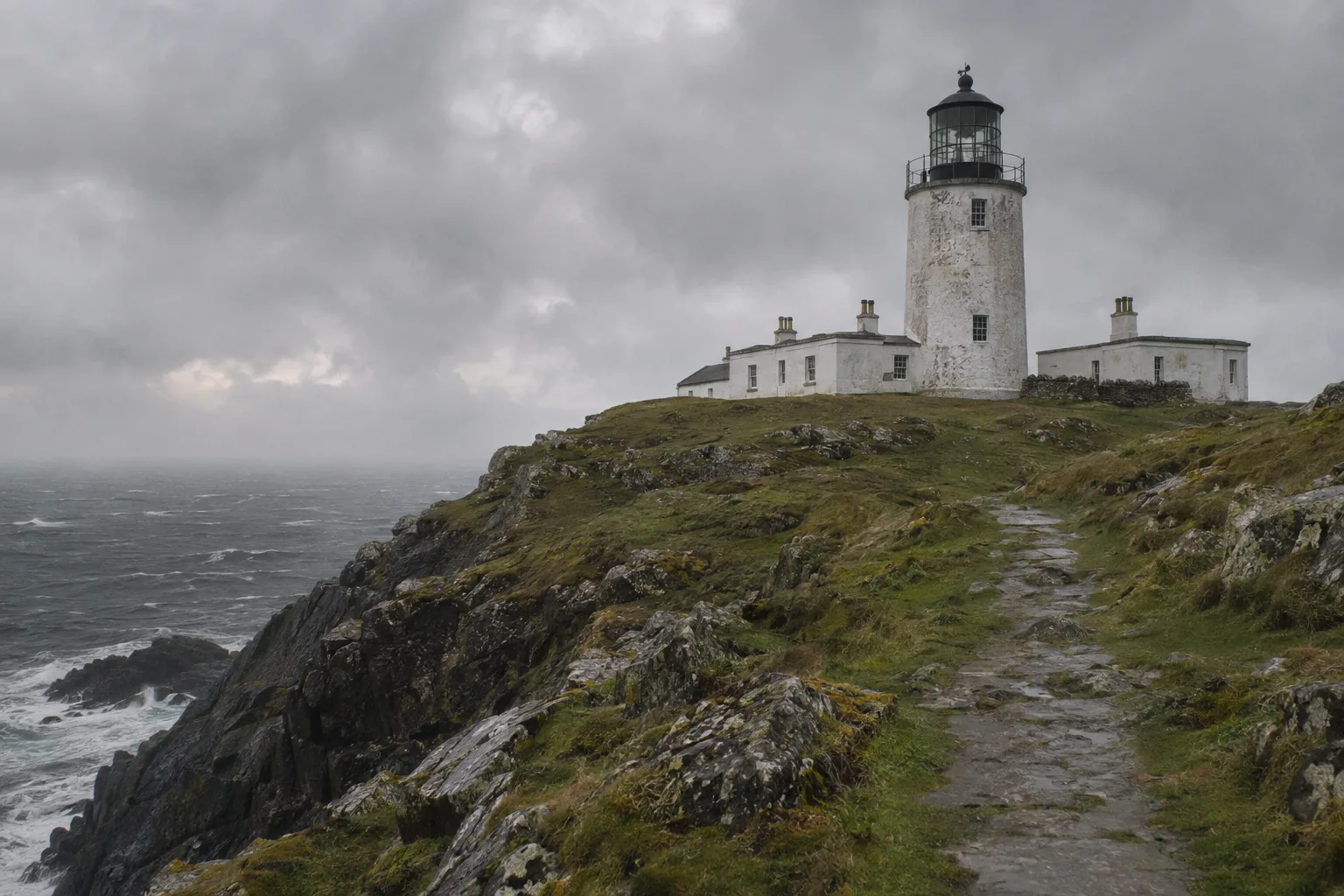
The Flannan Isles lighthouse was ready for work, but the men who maintained it were gone. When the relief vessel Hesperus reached Eilean Mòr on December 26, 1900, nobody answered the arrival signal. Joseph Moore went ashore and found the station deserted.
James Ducat, Thomas Marshall and Donald McArthur never returned. The official investigation favoured a powerful wave sweeping them into the sea near a landing place. It did not witness their final moments. That gap has supported a century of frightening speculation, but the Flannan Isles mystery becomes more unsettling, and more human, when its records are separated from the stories added afterward.
In this story
The Flannan Isles were isolated by more than distance
The Northern Lighthouse Board’s current description places the lighthouse on the highest part of Eilean Mòr, in the Outer Hebrides off Scotland’s west coast. Its white tower stands 23 metres high. The rocky setting explains why a light was necessary and why keeping it working demanded more than tending a lamp indoors.
There was no radio link with Lewis at the time of the disappearance. An observer watched the light from the mainland side of the channel, while families lived at the shore station at Breasclete. The arrangement separated the keepers’ working world from the households waiting for them. Distance was also a delay in knowing when something had gone wrong.
It is easy to make that isolation supernatural. The documented circumstances are disturbing enough: a station could appear to be simply out of sight in poor conditions while its staff had already vanished. The absence of an immediate alarm does not require a hidden force. It requires a communications system with limits.
The Flannan Isles relief visit became a search
The Board’s account and transcriptions of contemporary reports identify Ducat as Principal Keeper, Marshall as Second Assistant, and McArthur as an occasional keeper covering for William Ross, who was on sick leave. Moore was arriving to resume duty, not to investigate a famous mystery.
After nobody responded to a rocket fired from the Hesperus, Moore went up to the lighthouse. The absence extended beyond one room or one missed greeting. There were no keepers to explain the station’s silence. Other men subsequently remained with Moore so the light could operate again.
The dates create much of the case’s dread. December 26 is the date the disappearance was discovered, not an established date of death. Investigators placed the probable loss earlier. Confusing those two moments turns an already difficult reconstruction into a misleading tale of three men disappearing at Christmas.
The last recorded work was ordinary
National Records of Scotland’s archival account distinguishes the formal log from temporary notes. The last completed log entries covered December 13, while a slate held later information, including observations from the morning of December 15, ready for transfer. The gap in the bound record was not evidence that routine observation had suddenly ceased.
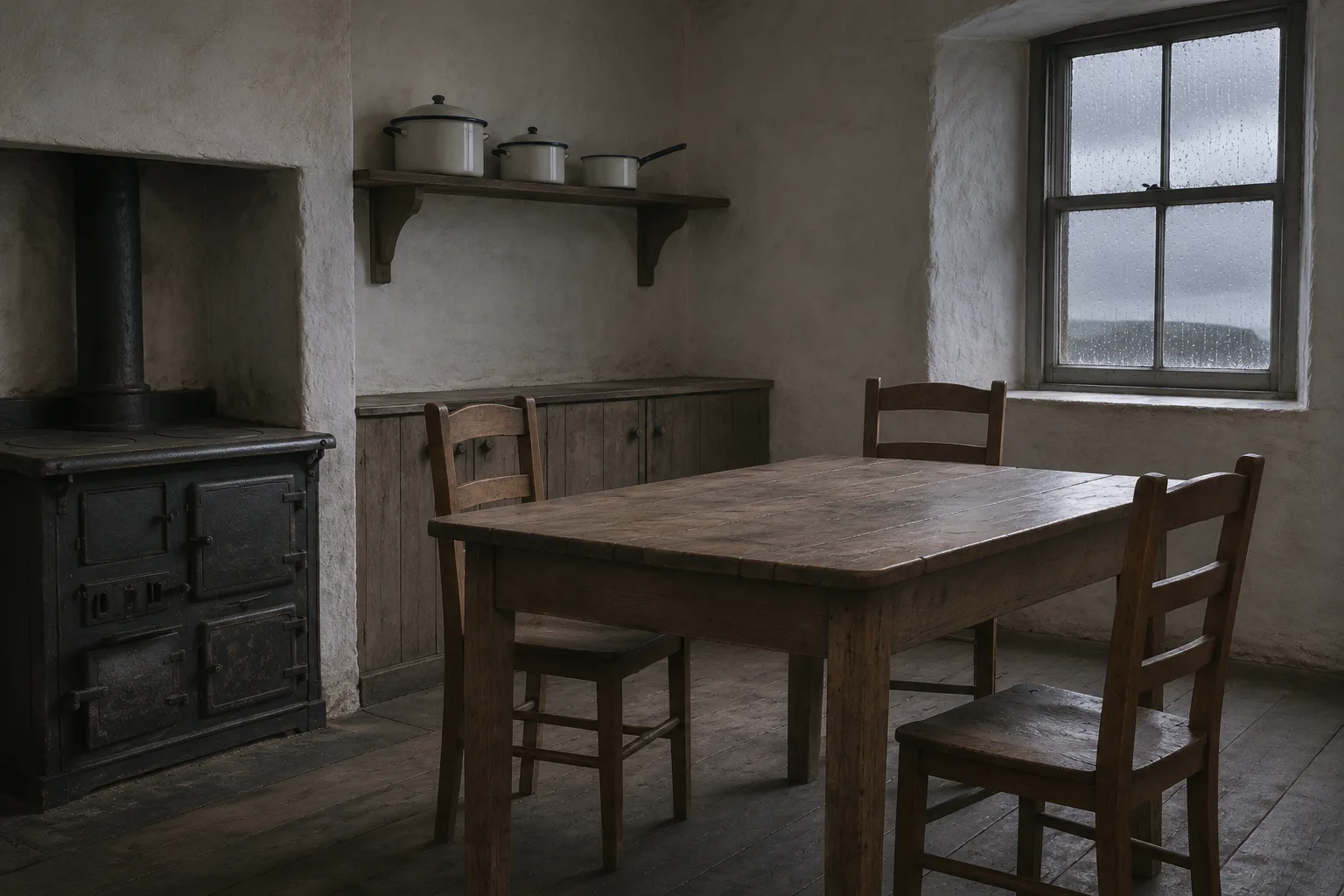
The same account describes a prepared lamp, cleaned equipment and a tidied kitchen. These details supported the inference that the morning’s work on December 15 had been completed before the men disappeared. They describe order, not a room interrupted in the middle of a theatrical struggle.
This is one reason the Flannan Isles case resists the usual horror-story furniture. A clean kitchen is less dramatic than a meal abandoned at the first mouthful, but it changes the question. Instead of asking what burst into a room, the records direct attention toward why the keepers went outside.
What the west landing could and could not explain
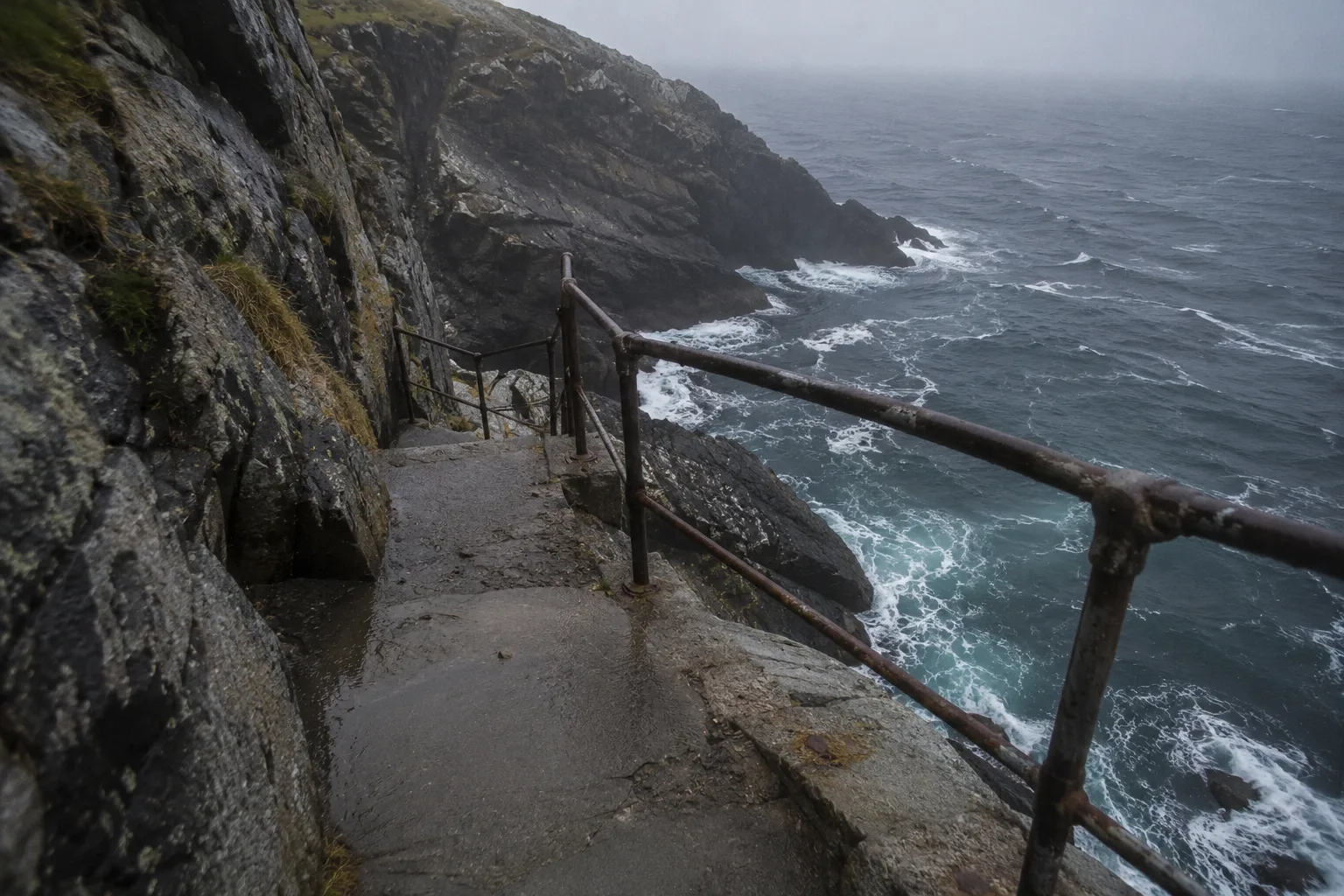
In its June 2026 announcement about displaying Moore’s letter, National Records of Scotland highlights damaged iron railings and displaced mooring equipment. The letter also inferred from the clothing left behind that two men had dressed for bad weather while a third had gone out without his usual coat.
Those are observations and deductions, not a recovered film of the accident. The damage gives a physical reason to take dangerous seas seriously. The clothing suggests different circumstances of departure. Neither establishes exactly where each man stood, whether they left together, or whether someone followed in haste to help.
The investigating superintendent, Robert Muirhead, considered an unexpectedly powerful wave near the west landing the likeliest explanation. The distinction between likelihood and certainty is the centre of the Flannan Isles mystery. An explanation can fit the surviving evidence better than its rivals without restoring the missing sequence of events.
The meal, the chair and the frightening diary
Historian Mike Dash’s study of the disappearance and its retellings examines details that became more vivid as the story travelled. Claims of emotional, ominous log entries belong to that disputed tradition. Dash points out problems of sourcing, chronology and tone rather than accepting them as a straightforward transcript.
Literature matters here too. Wilfrid Wilson Gibson’s poem Flannan Isle evokes an untouched meal and an overturned chair. A poem can give absence an unforgettable shape, but it is not an inventory made by the men who searched the station. The official descriptions of a tidied kitchen should not quietly disappear because the literary version is more cinematic.
Retelling has a powerful cumulative effect. A doubtful diary becomes a quotation, the quotation becomes a clue, and the clue begins to demand a supernatural explanation. Returning to the source removes a false certainty before it removes the fear. The real loss remains after the embellishment falls away.
What the Flannan Isles archive actually holds
The National Records of Scotland lighthouse research guide explicitly says it does not hold the original Flannan Islands logbook: it was not among the records deposited by the Commissioners. The guide does identify correspondence, telegrams, Muirhead’s report and documents relating to the families.
That is a useful boundary for an evidence review. We can read institutional descriptions of what the records contained without pretending we have personally opened a surviving logbook. We also cannot turn the archive’s lack of that item into proof of concealment, destruction or a message too alarming to preserve.
The files listed include discussions of pensions, gratuities and claims following the loss. Behind the mystery were people confronting practical consequences as well as grief. The archive’s quieter paperwork makes the vanished men harder to treat as anonymous characters who existed only to leave a frightening puzzle.
A working light survived the men who kept it
The Flannan Isles station continued after the disaster. According to the Board, the Flannan Isles lighthouse remained manned until September 28, 1971, when it became automatic. Its current listing states that there is no public access. A striking photograph online should not be mistaken for permission to enter the station or attempt a landing.
For a different Scottish example of evidence and reputation becoming entangled, the history and haunting claims of Edinburgh’s vaults shows how later storytelling reshapes a real place. The comparison concerns the handling of evidence, not a shared supernatural cause.
Similarly, the Dyatlov Pass incident and its competing explanations demonstrates why an unresolved sequence should not put every theory on equal footing. In the Flannan Isles, an environment capable of killing was already present. No invented attacker is necessary to take the danger seriously.
What remains when the ghost story is stripped away
The Flannan Isles mystery is not solved simply because a wave offers a plausible explanation. The men’s final movements remain unrecovered, and the official account cannot answer every question about their departure from the station. But uncertainty is not evidence that something impossible occurred.
The lasting horror lies in the contrast between completed work and total absence. A lamp could be prepared, a kitchen put in order, and a relief visit expected, while three lives had already ended beyond anyone’s sight. Keeping Ducat, Marshall and McArthur at the centre makes this a story about duty, dangerous seas and families left without a final account, not merely a haunted lighthouse waiting for its next visitor.
Sources and further reading
- Northern Lighthouse Board: disappearance and contemporary report transcriptions
- Northern Lighthouse Board: lighthouse history, specification and access
- National Records of Scotland: archival account of the keepers’ disappearance
- National Records of Scotland: surviving lighthouse records and missing logbook
- National Records of Scotland: June 2026 announcement about Moore’s letter
- Mike Dash: The Vanishing Lighthousemen of Eilean Mór