


Aum Shinrikyo did not begin in a hidden bunker or announce itself as a terrorist organization. It emerged from a yoga and meditation circle in 1980s Japan, speaking to people who felt alienated from a competitive, material society. Within little more than a decade, the movement had built isolated compounds, recruited scientists and physicians, murdered perceived enemies, and released a chemical weapon into Tokyo’s morning commute.
The horror of the case lies in that transformation. A charismatic teacher became an unquestionable prophet. Spiritual discipline became surveillance and punishment. Apocalyptic belief became permission to kill. By March 20, 1995, ordinary passengers were entering subway carriages while five coordinated teams prepared an attack that would leave thousands seeking medical help and families carrying consequences for decades.
From a yoga circle to an apocalyptic movement
Chizuo Matsumoto, who later adopted the name Shoko Asahara, established the group that became Aum Shinrikyo in 1984. Its teachings drew selectively from Buddhism, Hindu traditions, Christianity, yoga, and Asahara’s own prophecies. The movement promised spiritual power and survival through an approaching apocalypse, with Asahara positioned as the indispensable guide.
Aum gained official recognition as a religious corporation in Japan in 1989. It attracted followers from varied backgrounds, including graduates trained in medicine, chemistry, engineering, and computing. Their education did not protect them from coercive influence. Instead, the organization redirected professional expertise toward the leader’s ambitions.
Members who entered communal life surrendered money, distance from family, privacy, and increasingly their independent judgment. Inside a closed system, doubts could be treated as spiritual weakness while obedience became evidence of advancement. The more a member sacrificed, the more psychologically costly it became to accept that the movement was dangerous.
How Aum Shinrikyo converted belief into control
Asahara’s authority depended on more than doctrine. Aum regulated daily life, separated committed followers from outside relationships, and taught that the world beyond the group was corrupt and nearing destruction. Extreme practices were reframed as purification. Fear of catastrophe made the compound feel like the only safe place, even as conditions inside became more oppressive.
This pattern appears across destructive high-control groups. The leader claims unique access to truth, defines criticism as persecution, isolates members from competing information, and gradually makes harmful acts feel morally necessary. Evil’s Eye found similar mechanisms in the Manson Family’s system of manipulation, although the two movements differed greatly in scale, culture, organization, and ideology.
Aum also developed an internal hierarchy that rewarded proximity to Asahara. Followers could interpret advancement as proof that submission was working. Meanwhile, reported abuse and suspicious deaths were contained within an environment where the leader’s interpretation outranked law, medicine, family, and personal conscience.
The warning that came before Tokyo
The Tokyo subway attack was not Aum’s first use of sarin. On June 27, 1994, the nerve agent was released in Matsumoto, Nagano Prefecture, during an operation connected to a legal dispute involving the group. Eight deaths are now associated with that attack, and hundreds of people were affected.
The Matsumoto incident should have exposed an extraordinary threat. Instead, early suspicion fell heavily on a resident whose wife had been seriously harmed. The true perpetrators remained free. Aum learned that it could deploy a chemical agent in a Japanese city without immediately being identified and dismantled.
Other crimes had also preceded the subway attack. The organization targeted critics, former members, relatives seeking to recover loved ones, and people considered obstacles to Asahara’s authority. A 1995 United States Senate staff investigation concluded that the lack of an effective response to earlier crimes appeared to embolden the movement. By then, Aum’s apocalyptic worldview had fused with a practical capacity for violence.
March 20, 1995: terror in the morning commute
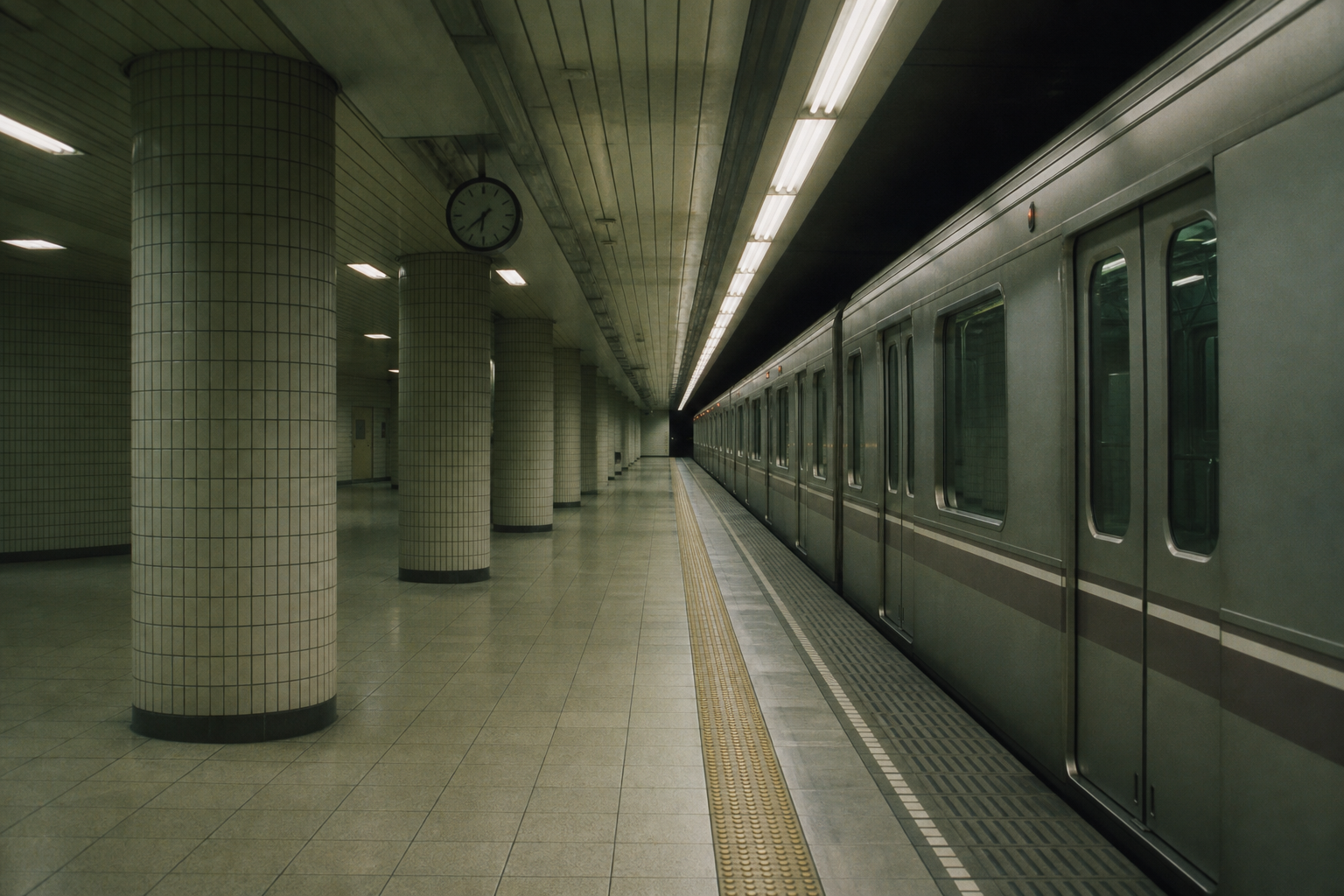
Shortly before 8 a.m., five Aum members entered trains on the Marunouchi, Hibiya, and Chiyoda subway lines. The routes converged near Kasumigaseki, the district housing major government offices. They carried liquid sarin in concealed packets, left them on carriage floors, and punctured them before leaving the trains.
Passengers initially had little reason to understand the danger. Sarin can be colorless and difficult to identify. As the liquid evaporated, commuters and transport workers experienced impaired vision, breathing problems, vomiting, convulsions, and collapse. Contaminated trains continued through the network while responders entered an emergency whose cause was not yet clear.
Modern accounts count 14 deaths connected to the attack, while thousands were injured or sought treatment. Earlier official and media reports often gave lower death totals, which is why different figures still appear in summaries. The number should never obscure the wider harm: survivors have described long-term physical symptoms, trauma, disrupted work, and a struggle for recognition that continued after public attention moved elsewhere.
Why educated followers carried out mass violence
The attackers were not acting under a momentary panic. They operated inside a belief system that had gradually reclassified outsiders as enemies and killing as spiritually defensible. Asahara’s apocalyptic predictions made violence appear both urgent and inevitable. Loyalty to the leader replaced ordinary moral restraint.
Professional knowledge amplified the danger. Aum recruited people capable of supporting laboratories, communications, logistics, and other specialized projects. Intelligence did not make those members immune to social pressure, isolation, sunk costs, fear, or reverence for authority. In a closed hierarchy, expertise can become a tool while ethical decisions remain concentrated in one person.
This is also why the Aum Shinrikyo case resists the comforting idea that only gullible people join cults. Recruitment commonly begins with belonging, meaning, discipline, or a promise of personal transformation. The destructive demands arrive later, after relationships and identity have been reorganized around the group.
The raids, trials, and fall of Shoko Asahara
Two days after the subway attack, police launched raids on Aum facilities. Investigators uncovered evidence of the organization’s weapons efforts and arrested senior members. Asahara was found hiding at the group’s compound in May 1995.
His criminal proceedings stretched across years. He was convicted for responsibility in multiple crimes, including the subway attack, and sentenced to death. Japan executed Asahara and six other members on July 6, 2018. Six additional members were executed later that month.
Legal punishment answered who directed and carried out specific crimes, but it could not repair every failure that allowed the movement to escalate. Families had warned about coercion. Critics had faced intimidation. The Matsumoto attack demonstrated chemical capability months before Tokyo. The case remains a study in what happens when warning signs are treated as separate disturbances rather than pieces of one expanding threat.
The cult did not simply disappear
Aum Shinrikyo lost its status as a religious corporation and later reorganized under the name Aleph. Another movement, Hikari no Wa, split away. Japan’s Public Security Intelligence Agency continues to publish information about Aum-related organizations and monitors them under the country’s organization-control framework.
That continuing attention is important because the mythology around a leader can survive the leader. Groups may change names, soften public language, separate into factions, or target a new generation unfamiliar with the original crimes. Public memory therefore has a protective purpose, especially when it includes survivor testimony rather than treating the attack as a macabre historical spectacle.
The same principle applies when reading about other apocalyptic movements. Evil’s Eye’s account of Heaven’s Gate and the 1997 tragedy shows a different ending, but again reveals how isolation, prophecy, and total loyalty can narrow a person’s world until an irreversible act appears logical.
What the Aum Shinrikyo case teaches
Aum Shinrikyo became exceptionally dangerous because several systems reinforced one another: absolute leadership, apocalyptic certainty, communal isolation, money, technical talent, and repeated failures to stop earlier violence. Remove the fantasy language and the pattern is stark. Authority was protected from scrutiny while every outside limit was recast as persecution.
The Tokyo attack is sometimes remembered primarily for its weapon because the method was shocking. Yet the deeper warning begins earlier. It begins when a leader becomes incapable of being wrong, when family contact is framed as contamination, when secrecy becomes virtue, and when harm is renamed as salvation.
That is why this story should end with the people who entered the subway expecting an ordinary Monday. They were not symbols in a cult narrative. They were commuters, railway workers, emergency responders, and families whose lives were changed by decisions made inside a sealed world. Remembering them clearly denies Aum the final power to make its mythology larger than its victims.
Sources
- Public Security Intelligence Agency of Japan, Aum Shinrikyo overview and victim materials
- Organisation for the Prohibition of Chemical Weapons, forensic investigation of the sarin attacks
- Japan Ministry of Land, Infrastructure, Transport and Tourism, 1995 transport report
- United States Senate Permanent Subcommittee on Investigations, Aum Shinrikyo case study
- Associated Press, survivors and families thirty years after the Tokyo subway attack