
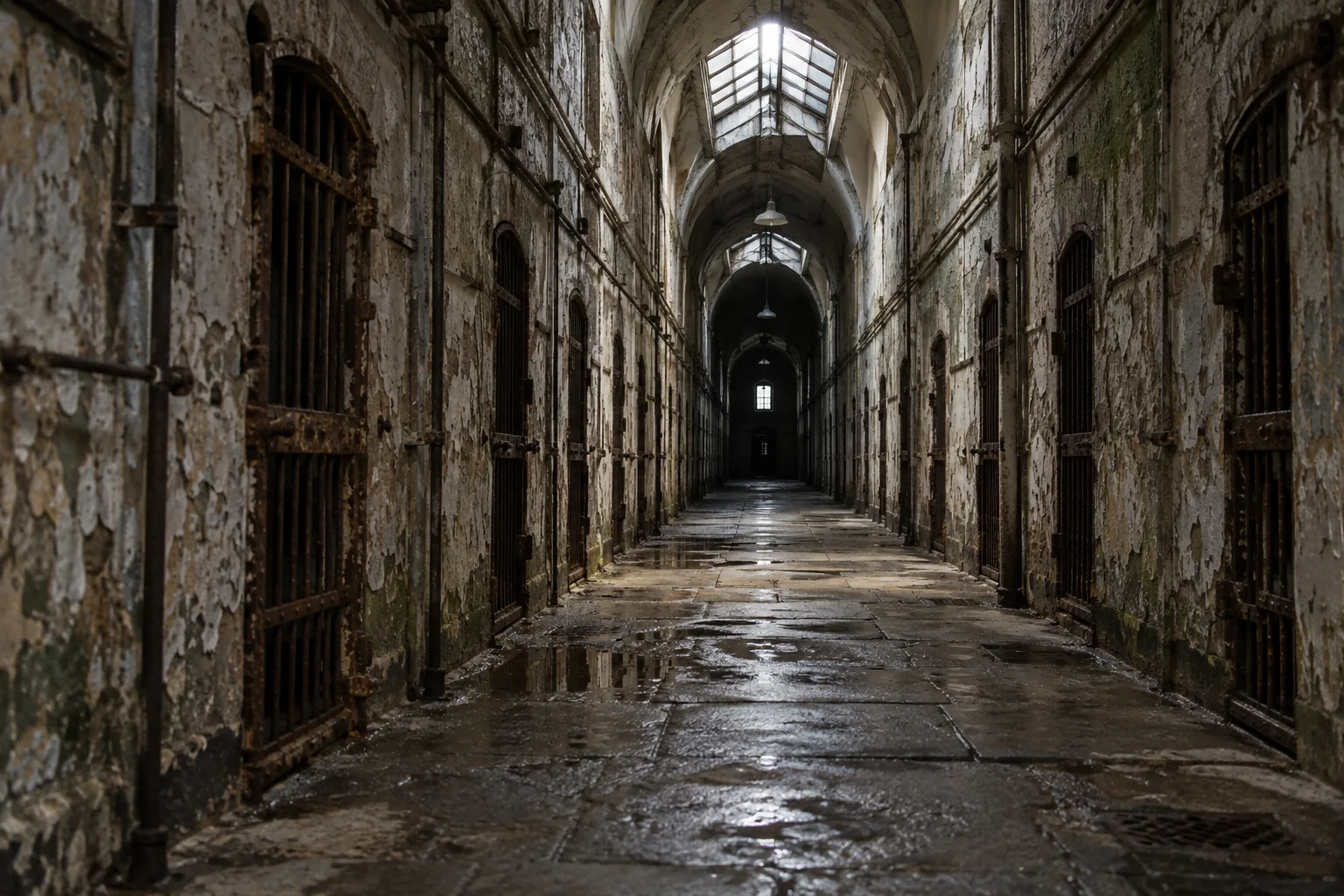
A corridor runs away from the central hub of Eastern State Penitentiary, its cell doors repeating until the far end disappears into shadow. In Philadelphia, the ruined prison needs no invented monster to feel frightening. Its earliest prisoners lived under a system designed to keep them apart, sometimes for years. Today, visitors report strange impressions in those empty passages, while the historic site acknowledges that ghost stories have circulated since the prison was still operating. Is Eastern State Penitentiary haunted? No paranormal claim has been proved, but the documented history behind the stories is disturbing enough.
That distinction matters in September 2026, as the site prepares for another Halloween season. Eastern State is simultaneously a museum, a place where real people were incarcerated, and the setting for a ticketed theatrical attraction. The screams staged for visitors should not be confused with accounts of the people who lived behind these walls.
The prison designed to make people repent
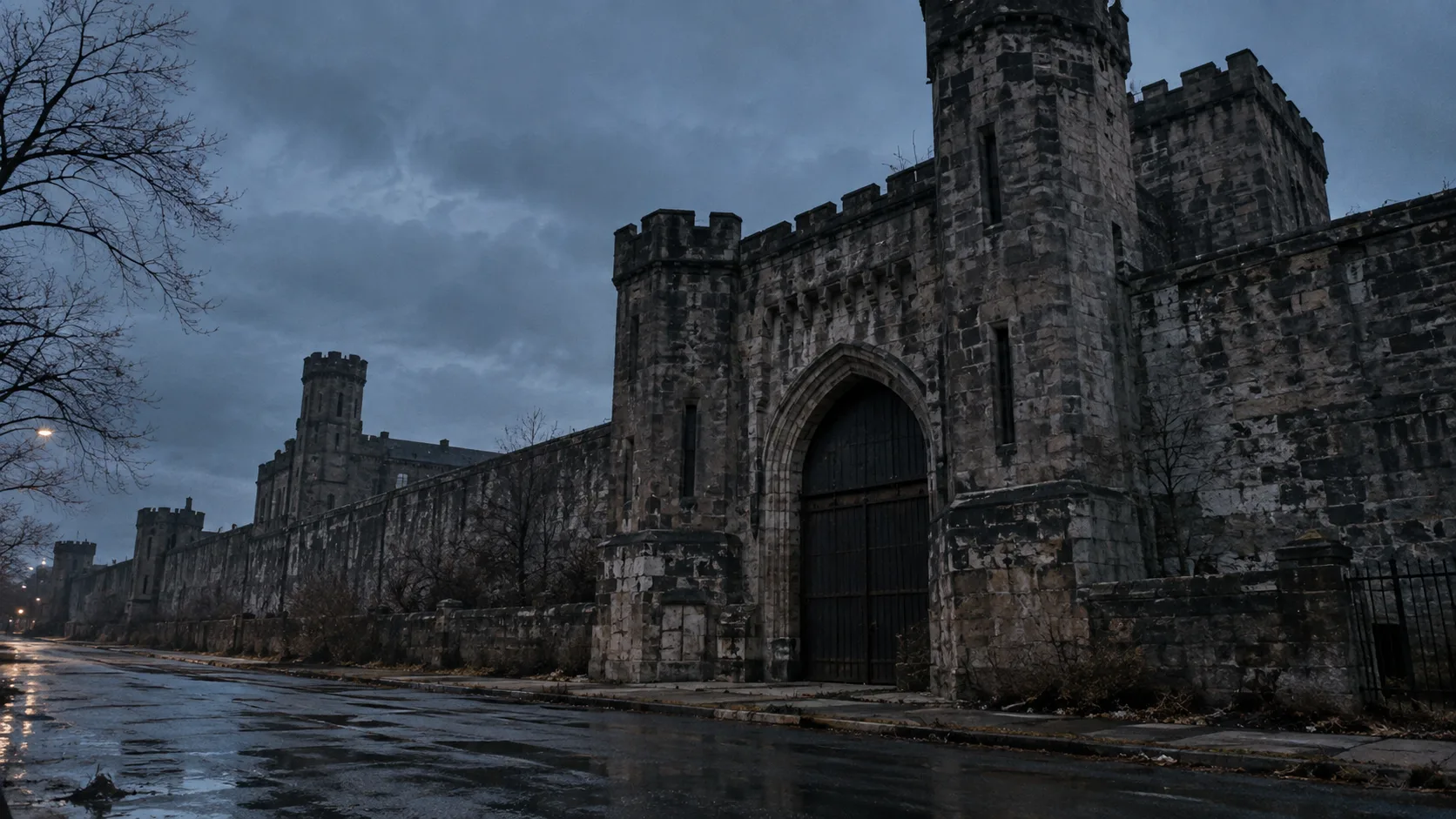
Eastern State opened in 1829. Its founders believed that separation, silence and labor would encourage people convicted of crimes to reflect on their actions. Architect John Haviland arranged the original cellblocks like spokes around a central surveillance hub. The Gothic Revival exterior was deliberately imposing, while individual cells and exercise yards limited contact between prisoners.
The model became known as the Pennsylvania System. According to the historic site’s account of its own history, reformers intended a humane alternative to crowded jails. The result drew criticism almost immediately. Charles Dickens visited in 1842 and condemned the effects of prolonged isolation. His objection did not require a ghost: he feared what silence could do to a living mind.
Eastern State eventually abandoned the separate system in 1913, although crowding had eroded it well before then. A prison originally planned for 250 people held roughly 1,700 at its mid-1920s peak. New cellblocks filled the spaces between the old spokes. The radial plan, once presented as a mechanism of reform, became a maze of confinement.
What prisoners actually endured
The institution’s suffering should not be flattened into an atmospheric backdrop. Its early cells were designed to isolate people from one another. Later, the prison used separate punishment cells, including an area called Klondike. In the site’s audio-tour transcript, former prisoners and staff describe the harshness of that isolation and its psychological effects.
Prison life also changed across 142 years. By the twentieth century, shared dining and a much larger population had replaced much of the original solitary routine. Famous names such as Al Capone and Willie Sutton appear in the record, but their stories cannot stand in for the thousands of lesser-known people who passed through the gates. A haunting article owes those people more than a generic claim that “many died here.” The documented conditions, policy choices and individual testimony are the real history.
Where the Eastern State Penitentiary ghost stories began
The historic site says officers and prisoners reported mysterious visions and unsettling experiences as early as the 1940s. That makes the folklore older than the modern visitor attraction, but it does not verify a supernatural cause. The accounts vary: a sensed presence, unexplained sounds, movement glimpsed at the edge of sight, or an impression that an empty cellblock is not empty after all.
Cellblock 12 has gained particular attention through paranormal television. The museum’s visitor information mentions disputed footage recorded there during a Ghost Hunters production. A recording can show something puzzling without identifying its cause. Camera angle, lighting, editing and ordinary movement all matter, and a television segment is not a controlled investigation.
The strongest reason these tales persist may be the building itself. Long parallel corridors interrupt distance cues. Repeated doorways make movement hard to locate. Sound can travel through old masonry and return from a direction a visitor does not expect. Those possibilities do not disprove any individual experience. They explain why the setting demands careful observation before a ghost becomes the answer.
The silence that makes a cell feel occupied
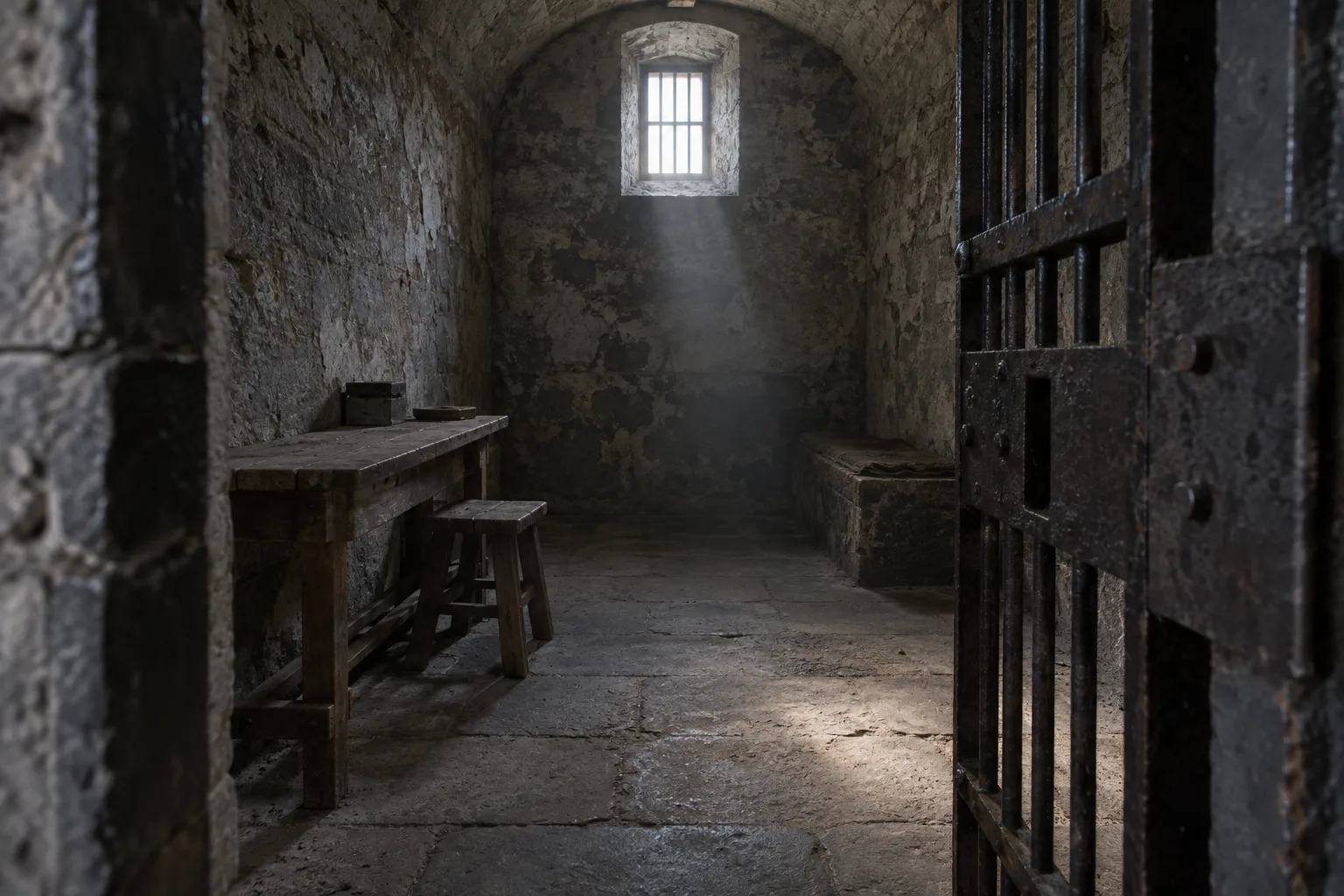
A small cell can be more frightening than the prison’s monumental facade. Light falls through a narrow window, leaving most of the room in gray. A heavy door divides a person from the corridor. The arrangement was designed for separation, so a visitor can understand its emotional force even without believing in spirits.
This is the point where a factual horror story must resist an easy shortcut. Calling every strange noise the voice of a former prisoner turns real lives into props. It also erases the more specific question the place raises: what does a system built on isolation leave behind in the people who pass through it, and in the culture that remembers it?
History, haunting and the Halloween attraction
Eastern State ceased operating as a Pennsylvania prison in 1970, served briefly as a city jail, then stood vacant after 1971. Preservation efforts saved the deteriorating complex from demolition, and it opened as a historic site in 1994. Its ruined appearance is therefore part of the visitor experience, but also the result of years of exposure and conservation decisions.
For 2026, the institution has announced Halloween Nights from October 2 through November 7 on select nights. The program includes five haunted houses as well as historic tours and museum experiences. The haunted houses use performers and effects. They are entertainment, not evidence for the prison’s ghost claims.
The site’s rules reflect this separation. Its visitor information says independent paranormal investigations are not permitted, while its stated focus is preserving the prison and examining the history of criminal justice. Anyone seeking the real Eastern State story should make time for those historical exhibits, not only the seasonal scares.
What the evidence can and cannot say
The prison unquestionably existed, imposed prolonged separation, grew overcrowded, and left a record of criticism from people who saw or experienced its practices. The site also acknowledges a long tradition of eerie reports. None of those facts establishes that the dead remain inside its cellblocks.
Anecdotes deserve accurate attribution, but they cannot be treated as controlled evidence. No verified recording identifies a spirit, and the cause of a fleeting shadow or unfamiliar sound cannot be recovered from a dramatic retelling. The most honest reading leaves room for a visitor’s fear without claiming that fear proves the supernatural.
That tension connects Eastern State to other Evil’s Eye cases. At the Queen Mary, documented human history and later ghost tourism share one famous location. At Poveglia Island, isolation and incomplete evidence helped sensational stories outrun the record. Eastern State offers an unusually strong opportunity to tell both halves responsibly because the museum itself preserves extensive historical material.
The horror that remains after the lights come on
Eastern State Penitentiary is not proven haunted. Its most credible horror is visible in the design: a theory that silence and separation would reform people, carried out in stone cells and later challenged by those who saw its effects. The building can still frighten visitors after they learn that distinction. In fact, knowledge may make the corridor feel worse.
During Halloween Nights, an actor can step from a doorway and make a crowd scream. When the performance ends, the original cells remain. That is where the story becomes difficult to dismiss. The ghosts are disputed, but the system that built the prison is not.
Read next
- Explore the documented past behind the Queen Mary ghost stories.
- Separate history from frightening legend at Poveglia Island.
- Compare witness claims and evidence in the Enfield Poltergeist investigation.
Sources
- Eastern State Penitentiary Historic Site: institutional history
- Eastern State Penitentiary Historic Site: historical timeline
- Eastern State Penitentiary Historic Site: audio-tour transcript
- Eastern State Penitentiary Historic Site: visitor and haunting information
- Eastern State Penitentiary Historic Site: 2026 Halloween Nights announcement