
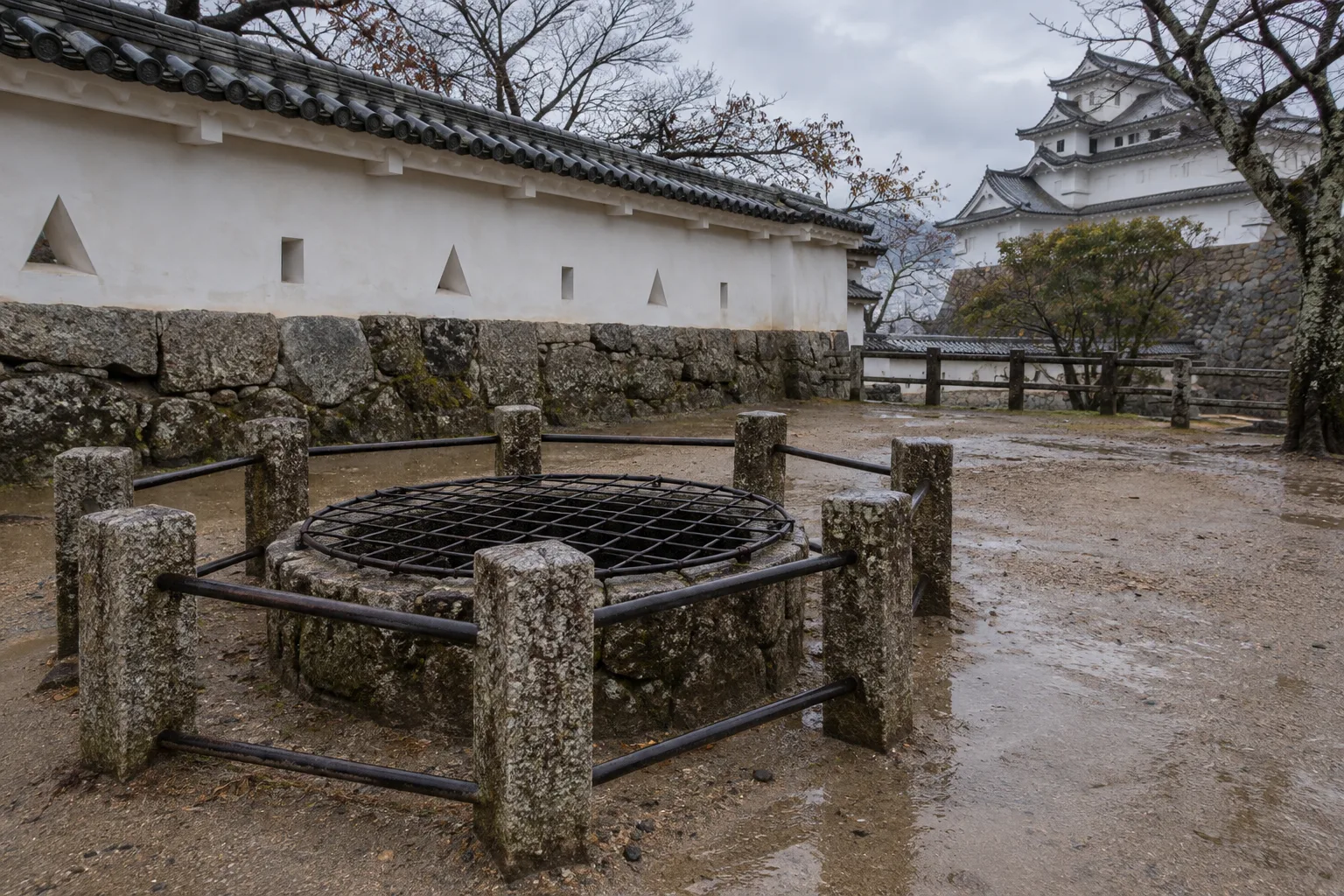
Okiku’s Well gives Himeji Castle a ghost story that turns on something almost absurdly ordinary: a missing plate. In the legend, a servant dies after an accusation, and her voice returns from a well to count a set that will never be complete. Okiku’s Well is a real location in Japan. The haunting belongs to folklore, not an established record of supernatural events.
That distinction does little to soften the story’s central image. A well is an opening you can stand beside without seeing where it ends. Add a voice counting from below, and the darkness acquires a dreadful purpose. Before treating the tale as a true crime, however, it helps to separate the castle, the artwork and the changing versions of Okiku’s fate.
In this story
A ghost story inside the White Heron Castle
Himeji Castle stands in Hyogo Prefecture, western Japan. Its white walls and layered roofs give it an elegance that makes the well’s reputation especially jarring. UNESCO describes Himeji-jo as an outstanding surviving example of early seventeenth-century Japanese castle architecture, combining wooden construction with white plastered earthen walls and carefully planned defences.
The important contrast is not between a beautiful exterior and a secretly ruined building. This is a preserved historic place. Okiku’s Well sits within that setting as a specific location attached to a story, rather than proof that the whole castle is an abandoned paranormal site.
An official Himeji visitor map marks Okiku-ido Well as a named feature. That makes the place easy to distinguish from an anonymous internet legend. It does not, by itself, establish what happened there centuries ago.
The voice that cannot reach ten
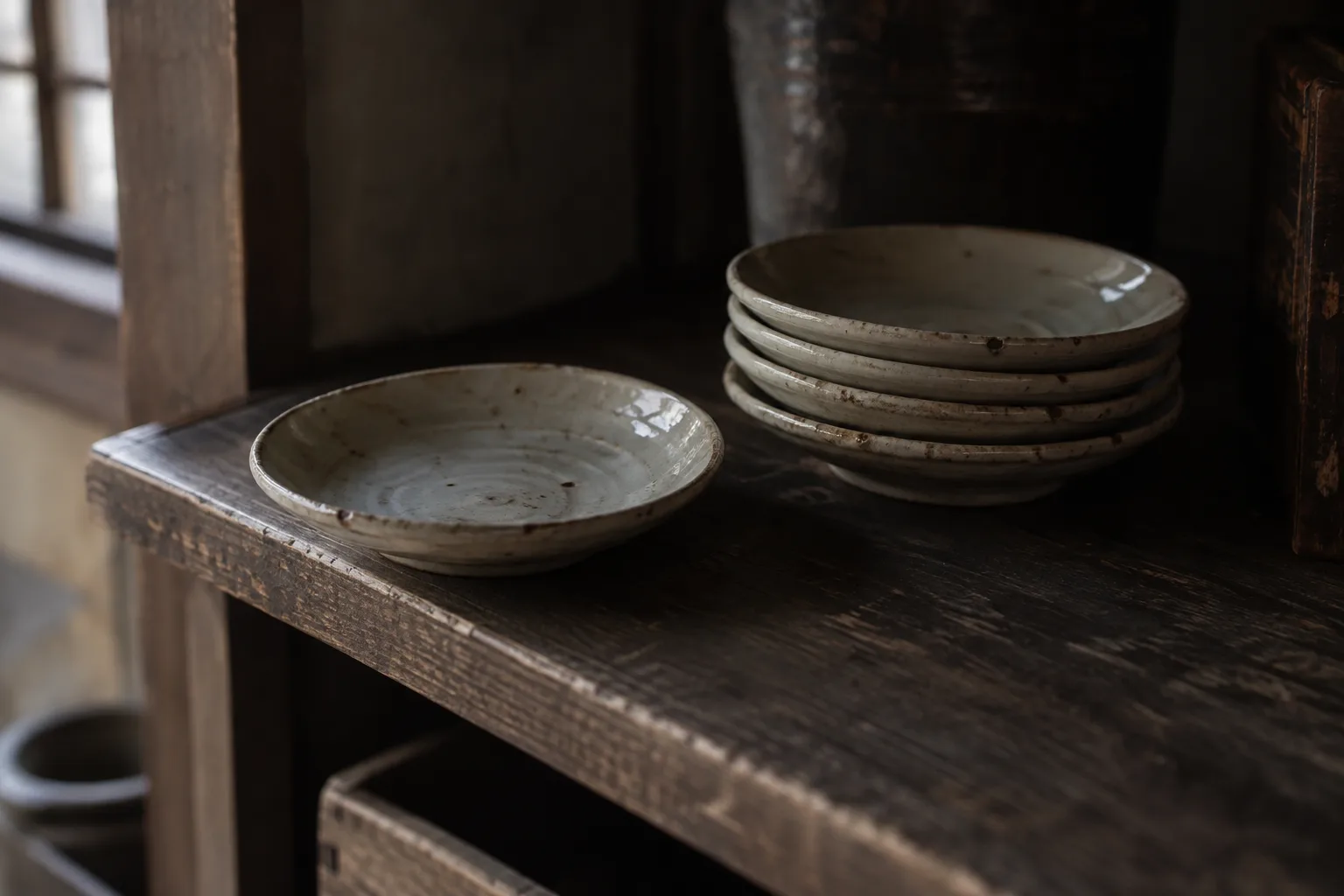
The National Gallery of Victoria’s Hokusai exhibition guide recounts a version in which the samurai Aoyama Tessan accuses his servant Okiku of breaking one of ten valuable plates. She denies it. He kills her and puts her body in a well. Afterwards, the tale says, her voice counts to nine before breaking into a cry.
Read as folklore, the frightening part is the repetition. Nothing can repair the set, and nothing releases the servant from the accusation. Death does not end her work. The household’s demand follows her into the dark, where the same failed count begins again.
There is cruelty beneath the supernatural device. An object carries more weight than a person’s denial. That imbalance gives the story emotional force without requiring a modern claim that a microphone has recorded a ghost. The terror lies as much in the treatment of Okiku as in the sound imagined afterwards.
Why the versions should not become one true story
The name connected with Himeji is Banshu Sarayashiki. A Himeji city cultural map explicitly links that ghost story with Okiku-ido. The map also recalls designer Kenzo Takada testing his courage there with friends. That is evidence of the legend’s place in local memory, not independent confirmation of its events.
Even museum storytelling preserves differences. The NGV guide’s separate children’s interpretation makes another member of the household responsible for the broken plate and changes the circumstances of Okiku’s death. Those are consequential differences, not details an editor should quietly combine into a single account.
For readers researching Okiku’s Well, the safest approach is to ask which version a source is telling. A shared name, a plate and a well do not establish one recoverable biography. This article treats the narratives as variants and does not assign the legend a precise murder date unsupported by the sources.
Hokusai made the nightmare visible
The story also survives in Hokusai’s print The Mansion of the Plates, from One Hundred Ghost Stories, dated around 1831 by the NGV. Its impossible, plate-like neck turns the household objects into part of the apparition. This is a designed supernatural image, not an eyewitness sketch.
The Library of Congress catalogue for Sarayashiki identifies Hokusai as the artist and describes a ghost emerging from a well. Its summary also identifies the subject as a Japanese legend. These records give the story a tangible cultural history: a print can be catalogued and studied even when the apparition it depicts cannot be verified.
That separation matters. An old image proves that an image existed, not that its subject appeared in front of the artist. Yet the print reveals an imaginative insight: the missing object can become more terrifying than any visible weapon. It is the unresolved accusation made into a body.
What Okiku’s Well can and cannot prove
There are three different things to evaluate here: a physical location, a long-lived narrative and a supernatural claim. The official map supports the location. Museum records support the artistic tradition. Neither supplies independently verified evidence that a dead servant speaks from the well.
The sources reviewed for this article do not establish a documented murder matching every part of the legend. Nor do they provide a reproducible investigation confirming the voice. Calling Okiku’s Well a famous haunted place therefore describes its reputation, not a scientific finding or a settled criminal case.
The distinction also helps with other stories. Our examination of Houska Castle’s gateway-to-hell legend considers the distance between an extraordinary explanation and a real building. Meanwhile, the reported hauntings of the Edinburgh Vaults show how strongly a setting can shape the stories told about it. These are comparisons in storytelling, not evidence that the places share a supernatural cause.
Seeing Okiku’s Well without chasing a midnight claim
Visit as a guest of a historic site, not as someone entitled to enter a restricted space for a ghost hunt. Consult the castle’s map, follow barriers and staff directions, and leave the well undisturbed. Nothing in the legend justifies climbing an enclosure or dropping objects into it.
As checked on October 10, 2026, the official Himeji Castle website lists opening hours of 9 a.m. to 5 p.m., with entry ending at 4 p.m. It also warns of steep stairs and slopes. Check current arrangements before travelling; the castle’s evening illumination should not be mistaken for permission to access the well at night.
Daylight is enough to understand the story’s structure. The visitor can locate the well and read about its association without expecting a performance from the darkness. The most useful thing to take home is the difference between what the place shows and what the legend asks you to imagine.
The missing plate remains missing
Okiku’s Well endures because its horror is precise: an accusation, an unfinished count and a place from which a voice should not return. The documented foundations are the site and its cultural afterlife. The death narrative varies; the haunting remains unverified.
That leaves a stronger story than a forced declaration that the ghost is real. Okiku is trapped not merely underground but inside a demand she can never satisfy. The listener knows what should come after nine. The legend refuses to let it arrive.
Sources and further reading
- UNESCO World Heritage Centre: Himeji-jo
- Visit Himeji: castle map identifying Okiku-ido Well
- Himeji city: Kenzo Takada cultural map and Banshu Sarayashiki reference
- National Gallery of Victoria: Hokusai exhibition labels, The Mansion of the Plates
- Library of Congress: Hokusai’s Sarayashiki catalogue record
- Himeji Castle: current visitor information