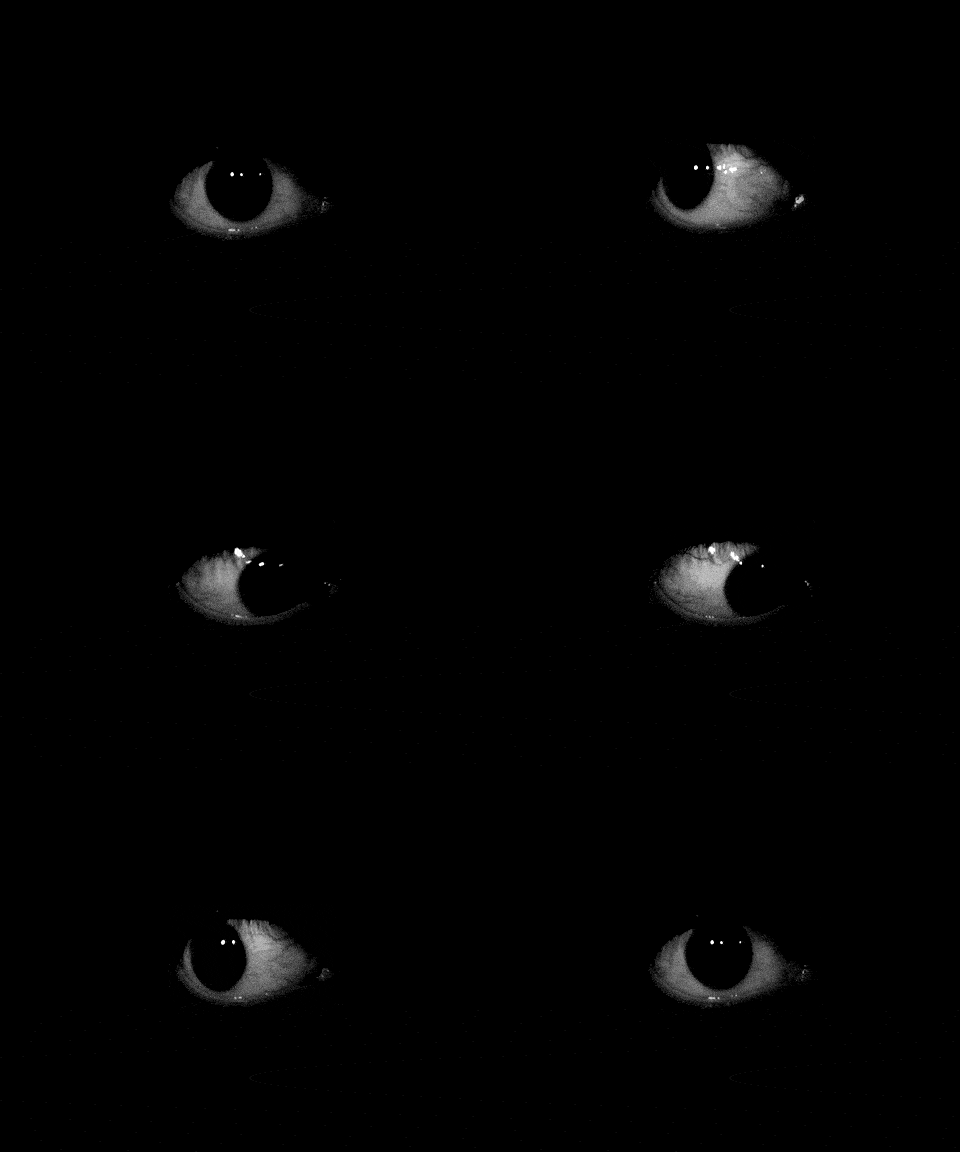

The first Werwulf trailer takes the werewolf story back to a world where the creature is not a movie monster with familiar rules. It is a rumor moving between a medieval village, a winter forest, and people whose faith cannot fully explain what is hunting them.
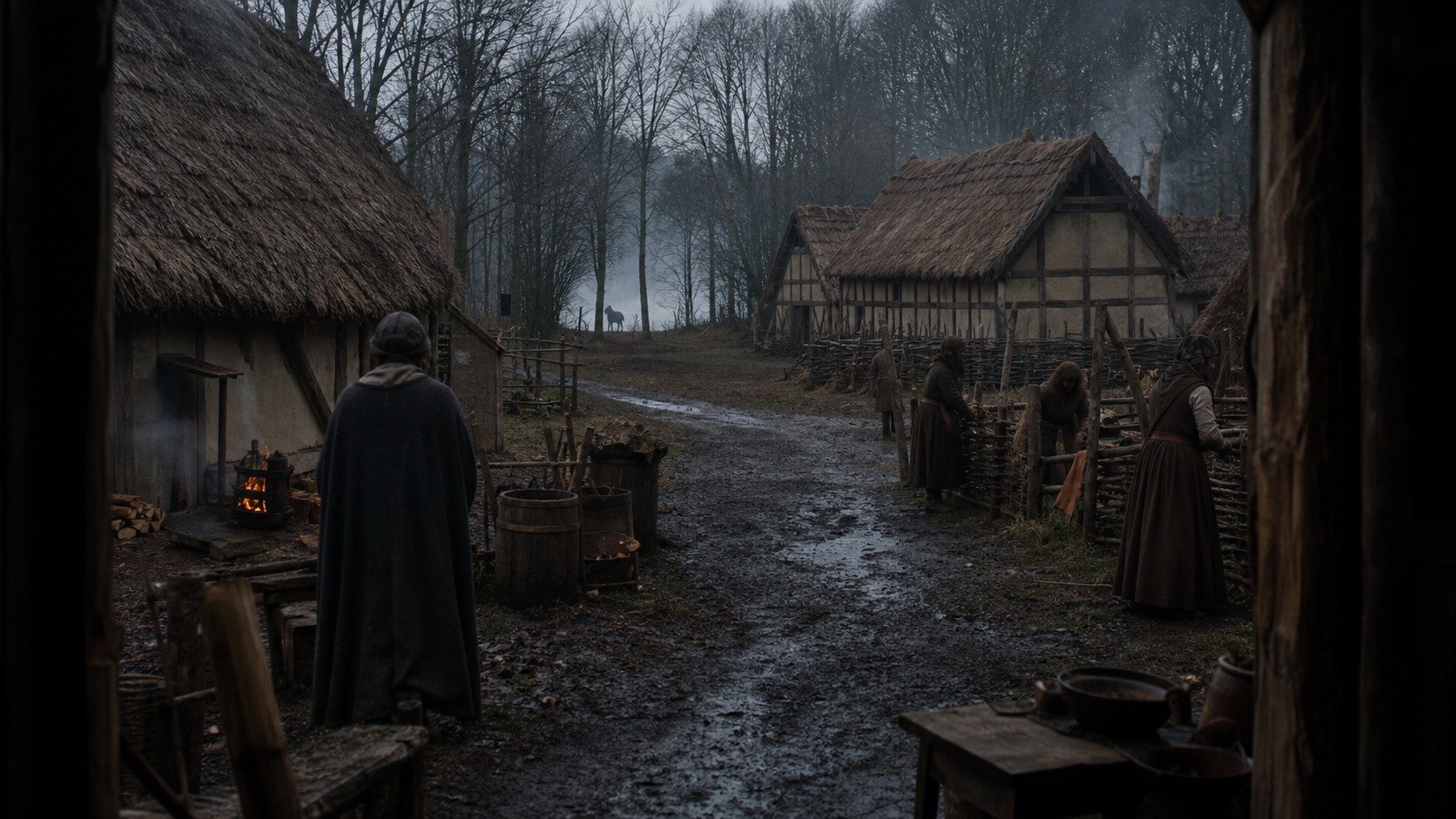
Robert Eggers returns to historical horror after Nosferatu, this time building a tale of devotion, damnation, and the beast within. The official footage is deliberately difficult to read. Bodies move in darkness, religious language collides with animal fear, and the landscape seems old enough to remember violence.
Werwulf trailer at a glance
- Release date: December 25, 2026
- Director: Robert Eggers
- Writers: Robert Eggers and Sjón
- Cast: Aaron Taylor-Johnson, Lily-Rose Depp, Willem Dafoe, and Ralph Ineson
- Setting: Medieval England
- Genre: Historical folk horror and werewolf horror
What the Werwulf trailer reveals
The trailer offers atmosphere before explanation. A community appears trapped between religious authority, older beliefs, and a physical threat in the surrounding darkness. Rather than presenting the werewolf as a simple creature feature, the footage suggests that transformation may be connected to sin, desire, punishment, or social fear.
Aaron Taylor-Johnson stands at the center of the imagery, but the exact nature of his character is intentionally unclear. Lily-Rose Depp and Willem Dafoe return after working with Eggers on Nosferatu. Ralph Ineson, whose voice helped define The Witch, also appears in the cast.
The Werwulf trailer does not explain who becomes the beast. That mystery is part of its appeal. In a village ruled by suspicion, anyone marked as an outsider can become the monster before a transformation is ever witnessed.
Why Robert Eggers is returning to folklore
Eggers builds horror by treating belief as part of everyday reality. In The Witch, Puritan faith shapes how a family understands misfortune. In The Lighthouse, maritime superstition becomes impossible to separate from guilt and madness. Nosferatu treats the vampire as disease, desire, and ancient evil at once.
Werwulf gives him another creature that changes across history. Medieval people did not share one standardized werewolf mythology. Stories could describe cursed bodies, criminal outsiders, warriors, witches, divine punishment, or people whose violent behavior seemed to cross the boundary between human and animal.
That variety lets the film avoid a checklist of silver bullets and full moons. The fear can come from not knowing whether the threat is physical, spiritual, psychological, or all three.
What makes the medieval setting frightening
The official description calls Werwulf a harrowing story of devotion, damnation, and the devil within. In a medieval community, those ideas can determine how illness, violence, sexuality, and unusual behavior are interpreted.
Isolation also changes the mechanics of fear. A winter village cannot call for modern help. The forest limits travel, darkness arrives early, and news moves through testimony rather than reliable evidence. If livestock are killed or a villager disappears, suspicion may become as dangerous as the creature.
The period setting should not be treated as a costume display. Eggers is known for researching language, materials, work, architecture, and ritual. Those details make supernatural events more convincing because the ordinary world feels specific.
Why the title is spelled Werwulf
The title uses an older-looking spelling rather than the modern word “werewolf.” The choice signals that the film is reaching toward the creature’s linguistic and folkloric past. It also separates the movie from contemporary action-horror versions of the myth.
That does not mean the spelling itself reveals the plot. It establishes tone. This is intended to feel like a story found in an old record, sermon, confession, or warning rather than a modern monster manual.
The cast and their history with Eggers
Aaron Taylor-Johnson leads the cast after appearing in Eggers’ Nosferatu. Lily-Rose Depp and Willem Dafoe also reunite with the director. Their return matters because Eggers’ films demand performances calibrated to unusual speech, strict social behavior, and historical worlds.
Ralph Ineson is another important collaborator. His work in The Witch demonstrated how voice and physical presence can make period dialogue feel lived rather than theatrical. The wider cast includes performers capable of making the village feel like a community with shared memories and private fears.
Will the dialogue use Middle English?
Reports around the production indicate that Eggers has pursued historically informed language. Viewers should expect dialogue designed to evoke medieval speech, though accessibility will matter for a wide theatrical audience.
Language can become part of the horror. A familiar word may carry a different meaning, a prayer may sound like an accusation, and testimony can be misunderstood. Subtitles or careful sound design may help audiences follow the story without removing its historical character.
Seven chilling details in the trailer
- The winter landscape: Mud, bare trees, and weak daylight make the village feel exposed.
- The uncertain creature: The trailer protects the beast from a complete reveal.
- The religious imagery: Faith may offer protection, judgment, or both.
- The villagers’ suspicion: Social fear appears capable of spreading faster than evidence.
- The physical performances: Movement suggests transformation without explaining it.
- The period texture: Clothing, timber, smoke, and labor make the world tangible.
- The Christmas release: The film turns a season of devotion and family into a setting for damnation.
How Werwulf differs from modern werewolf movies
Many recent werewolf films treat transformation as a medical condition, an action set piece, or a metaphor for adolescence. Werwulf appears more interested in the point where folklore, faith, and bodily violence meet.
The distinction matters because a medieval village cannot separate a monster from its moral meaning. If a person becomes a wolf, the community will ask what sin, curse, or hidden appetite caused it. The answer may reveal more about the accusers than the accused.
For readers drawn to historically rooted supernatural stories, our The Conjuring: First Communion guide explores another film where faith is expected to shape the horror.
Werwulf release date
Werwulf opens in theaters on December 25, 2026. Focus Features is positioning the film as a major Christmas horror release, repeating the holiday strategy used for Nosferatu.
Frequently asked questions
Who directed Werwulf?
Robert Eggers wrote and directed the film. He co-wrote the screenplay with Sjón.
Who stars in Werwulf?
The announced cast includes Aaron Taylor-Johnson, Lily-Rose Depp, Willem Dafoe, and Ralph Ineson.
When is Werwulf released?
The movie opens in theaters on December 25, 2026.
Is Werwulf connected to Nosferatu?
It is a separate story, but several actors reunite with Eggers after appearing in Nosferatu.
Final thoughts
The Werwulf trailer understands that the oldest monster stories were also stories about communities. A beast in the forest is frightening. A village deciding who deserves to be called a beast may be worse.