
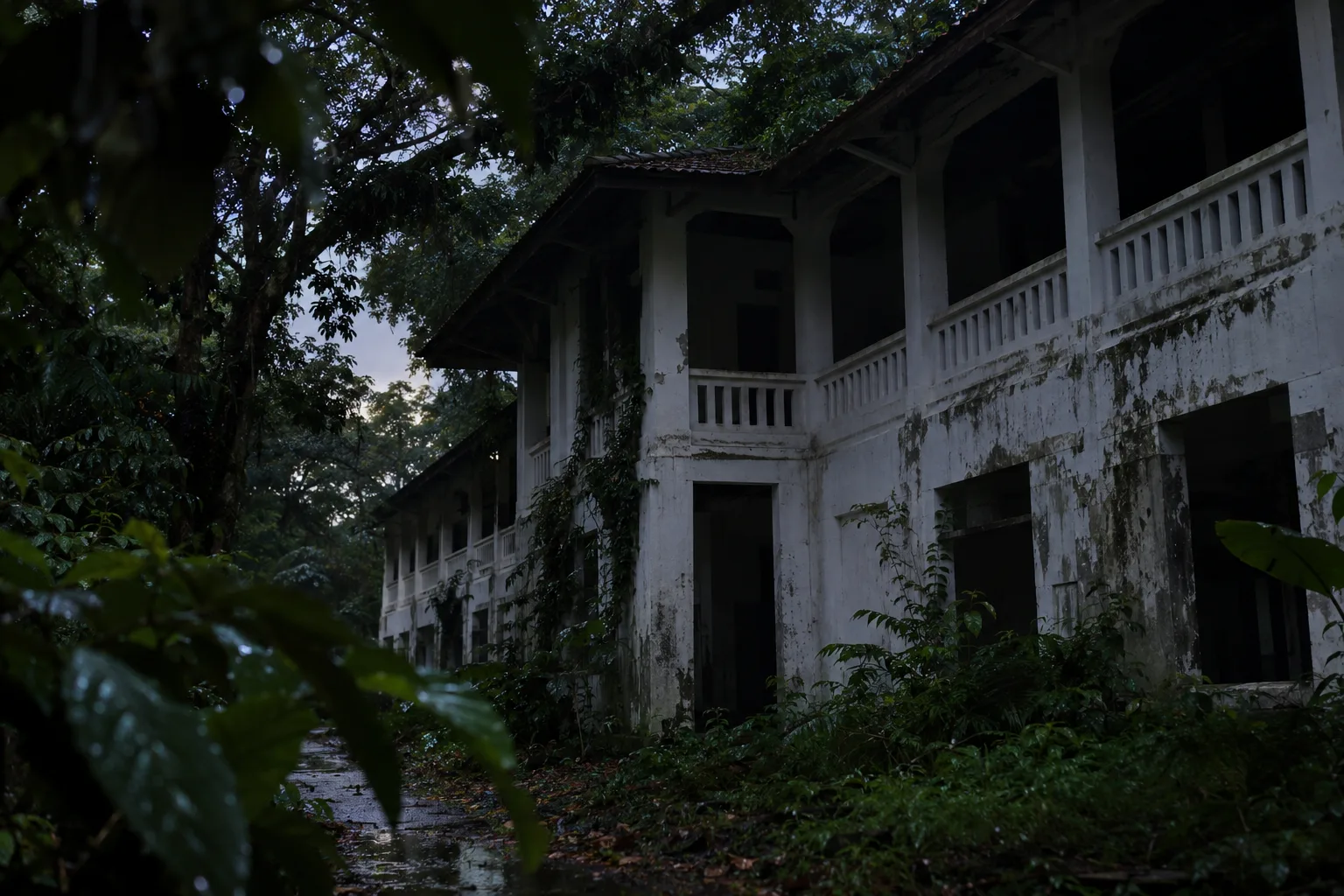
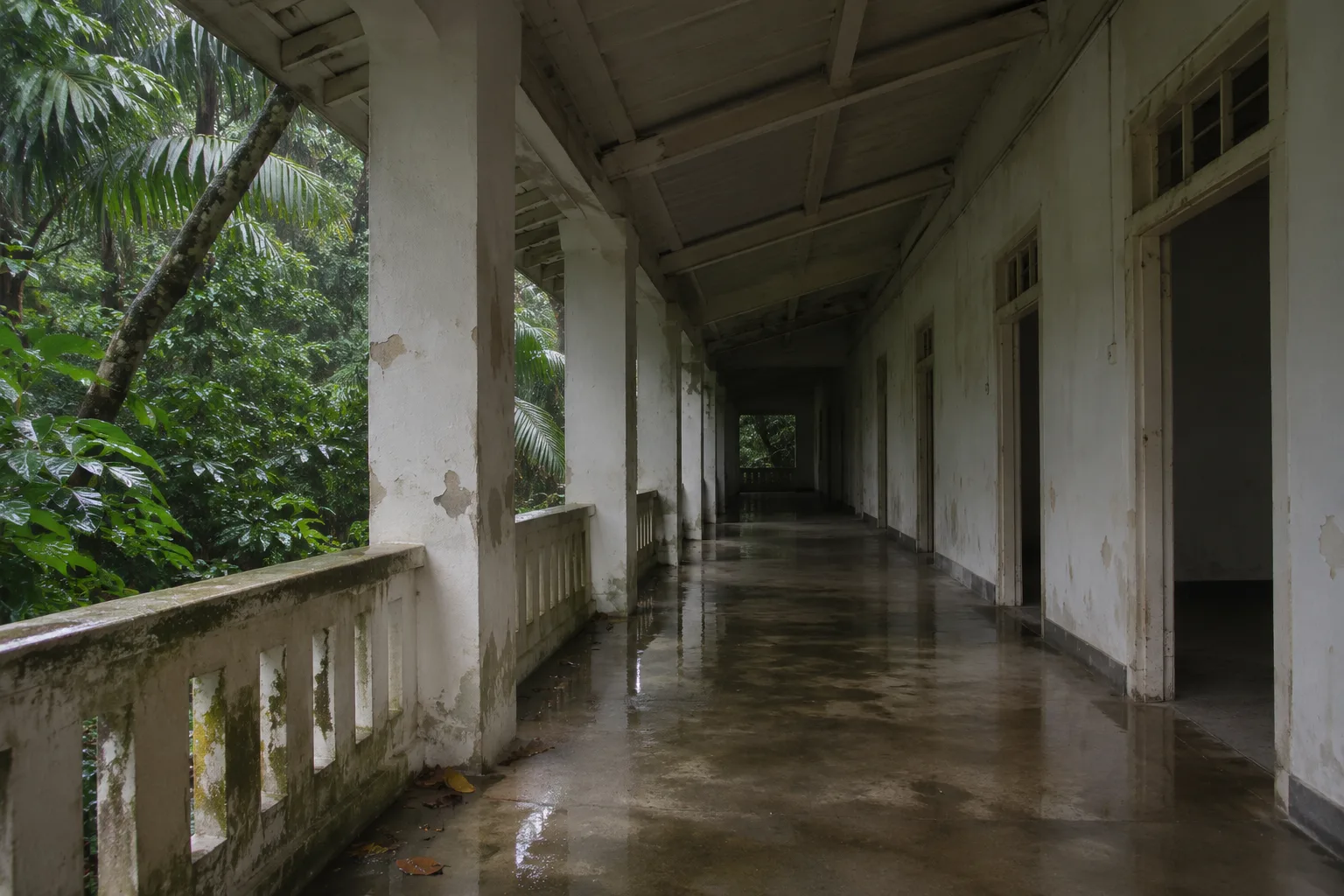
Old Changi Hospital looks unsettling for reasons its builders never intended. Broad verandas shelter rows of doorways from tropical rain. Large openings let air through the buildings, but they also leave deep patches of shadow behind a pale exterior. In photographs of the disused complex, the absence of patients and staff makes those practical features feel strangely watchful.
The Singapore landmark has a well-established reputation for hauntings. That reputation is not proof of a supernatural presence. Its more compelling story lies where military history, medical care and abandonment meet, and where the history of the wider Changi area sometimes gets folded into claims about one building.
Explore the history
A hill built for the military
The National Heritage Board’s architectural account describes buildings designed for Singapore’s climate: reinforced concrete, deep roof overhangs, high ceilings and wide external corridors. Their openness was functional. These were not Gothic ruins built to conceal something behind narrow windows.
Two of the principal buildings date to the British military expansion of the 1930s. A later linking block enlarged the complex in the 1960s. The Singapore Land Authority’s heritage book traces the older structures to Kitchener Barracks and distinguishes their origins from the postwar hospital institution.
That distinction matters when looking for a single opening date. Changi General Hospital’s own history begins its earlier hospital story in 1935, while the SLA book dates RAF Hospital Changi’s establishment to 1947. Buildings, medical facilities and institutions did not all begin at the same moment. The broad picture is consistent: the familiar complex emerged from military infrastructure rather than from a purpose-built haunted-house setting.
The wartime hospital was not always here
Changi’s wartime suffering is real, but geography still matters. According to Changi General Hospital’s institutional history, the hospital moved to Roberts Barracks shortly after the British surrender in 1942. The barracks became a large medical facility for prisoners of war, with separate buildings assigned to surgery and infectious-disease care.
After the occupation, the hospital returned to its earlier location. Military administration changed over the following decades, and the institution eventually served civilians too. Those transitions make a richer history than the idea of an unchanged building containing every terrible event associated with Changi.
They also create an essential check on horror retellings. An account of a wartime hospital does not automatically identify the room seen in a modern exploration video. Before attaching a death, treatment or atrocity to a particular corridor, a writer needs evidence linking that event to that place. Old Changi Hospital should not become a container into which every regional tragedy can be poured.
When Old Changi Hospital fell quiet
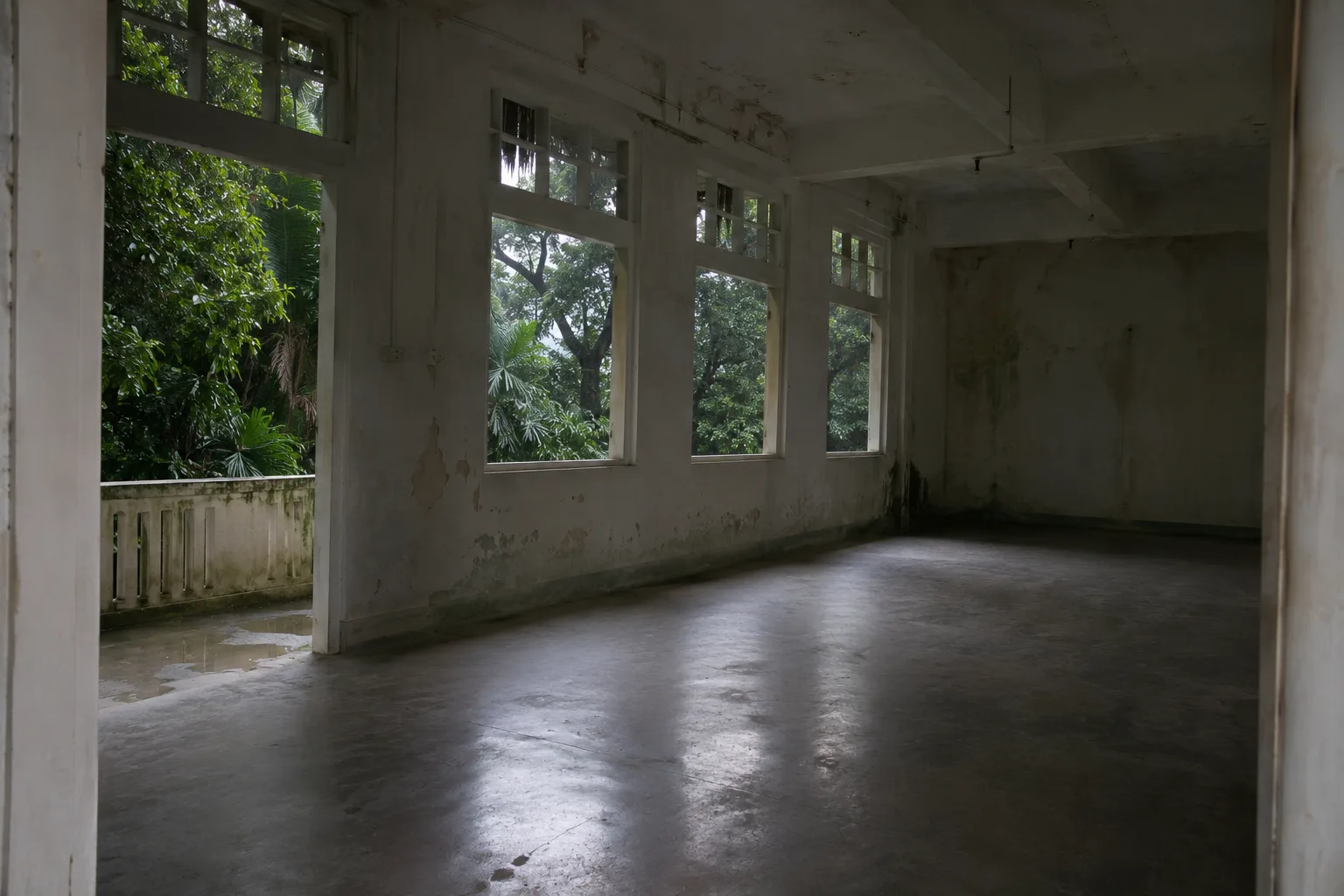
Medical work ended here in 1997 as patients moved to the new hospital in Simei. The empty buildings subsequently acquired another public identity through filming, photography and exploration. A place that had once required people to keep moving through it became a place people approached because it appeared deserted.
That reversal supplies much of the site’s dread. A hospital corridor has a purpose: it connects someone who needs help with someone who might provide it. Remove the staff, signs of care and ordinary bustle, and the same passage becomes harder to read. The viewer can still recognize what should happen there, but can no longer see anyone who could make it happen.
This is interpretation, not evidence of a haunting. It helps explain why photographs of Old Changi Hospital can be frightening without containing anything anomalous. An unoccupied doorway is enough to invite a story; it does not establish who, if anyone, stands beyond it.
What the haunting accounts actually establish
In CNA’s 2021 reporting on Changi, paranormal investigator Noel Boyd described the hospital’s appeal to visitors and the international reach of its reputation. He also recalled aspects of exploring it as beautiful and calming, complicating the image of a place everyone experiences as hostile.
The report included an electromagnetic-field detector demonstration in a disused guardhouse outside the compound. The location is important: the demonstration was not an investigation inside an old ward. A device lighting up records a response from that device. Without establishing what produced it, that response cannot identify a spirit or prove a particular ghost story.
CNA documents people engaging with a haunted reputation. It does not establish a supernatural cause for that reputation. Nor does a calm recollection disprove every other person’s experience. The responsible conclusion is narrower: these accounts preserve reactions, expectations and beliefs, rather than a confirmed explanation for unexplained events.
The memories the ghost stories leave out
The SLA heritage book includes a return visit by a woman born at the hospital, Shona Trench. Her family memories concern births, treatment and recovery. During an officially arranged visit in 2017, the old buildings represented a surviving connection with her family’s time in Singapore.
Those memories do not make the abandoned setting less unsettling. They make it harder to treat the place as an anonymous stage. A frightening corridor was also a route someone took toward a recovering relative. A building associated with ghosts was, for others, where life began.
The contrast recalls Waverly Hills Sanatorium’s medical history and later haunting reputation. Hospitals carry stories because people experienced fear, dependence and relief inside them. Reducing all that to a collection of deaths erases much of what makes the empty rooms emotionally powerful.
A future beyond the locked doors
Authorities have also considered Old Changi Hospital as a place with a future. In 2021, the Urban Redevelopment Authority and Singapore Land Authority invited proposals for adaptive reuse. The official announcement of winning ideas described proposals subject to further review, not a declaration that a new attraction had opened.
Likewise, older exploration accounts should not be read as permission to enter today. CNA reported the complex fenced off in 2021. Readers should follow current official access information and remain outside any restricted or secured area. A historic photograph, a heritage listing or a video from an earlier visit does not grant access.
For regional context, Pontianak folklore and its frightening traditions shows how a supernatural story can acquire cultural force without functioning as evidence about a specific site. At Changi, the distinction is between an enduring public legend and a documented architectural and medical history.
Old Changi Hospital remains an unsettling subject precisely because those histories overlap without becoming the same thing. The buildings can provoke dread; the records can recover human lives. Neither requires us to invent a figure at the end of a corridor. What makes the emptiness disturbing is knowing how much happened before it, and how easily a ghost story can replace everything else.
Sources and reporting notes
- National Heritage Board: architecture and history of Old Changi Hospital.
- Changi General Hospital: institutional heritage and hospital relocation.
- Singapore Land Authority: The Places You Know, The Stories You Don’t, printed pages 116-120.
- CNA: Up Your Alley, Changi, reported 2021 and updated 2022.
- URA: 2021 Charmingly Changi competition announcement and winning proposals.
Reporting note: descriptions of atmosphere are editorial interpretation, not a claim of a site visit. Paranormal accounts remain unverified. Older sources document conditions at their reporting dates, not a current visitor-access guarantee. Illustrations are original interpretations rather than documentary photographs.