
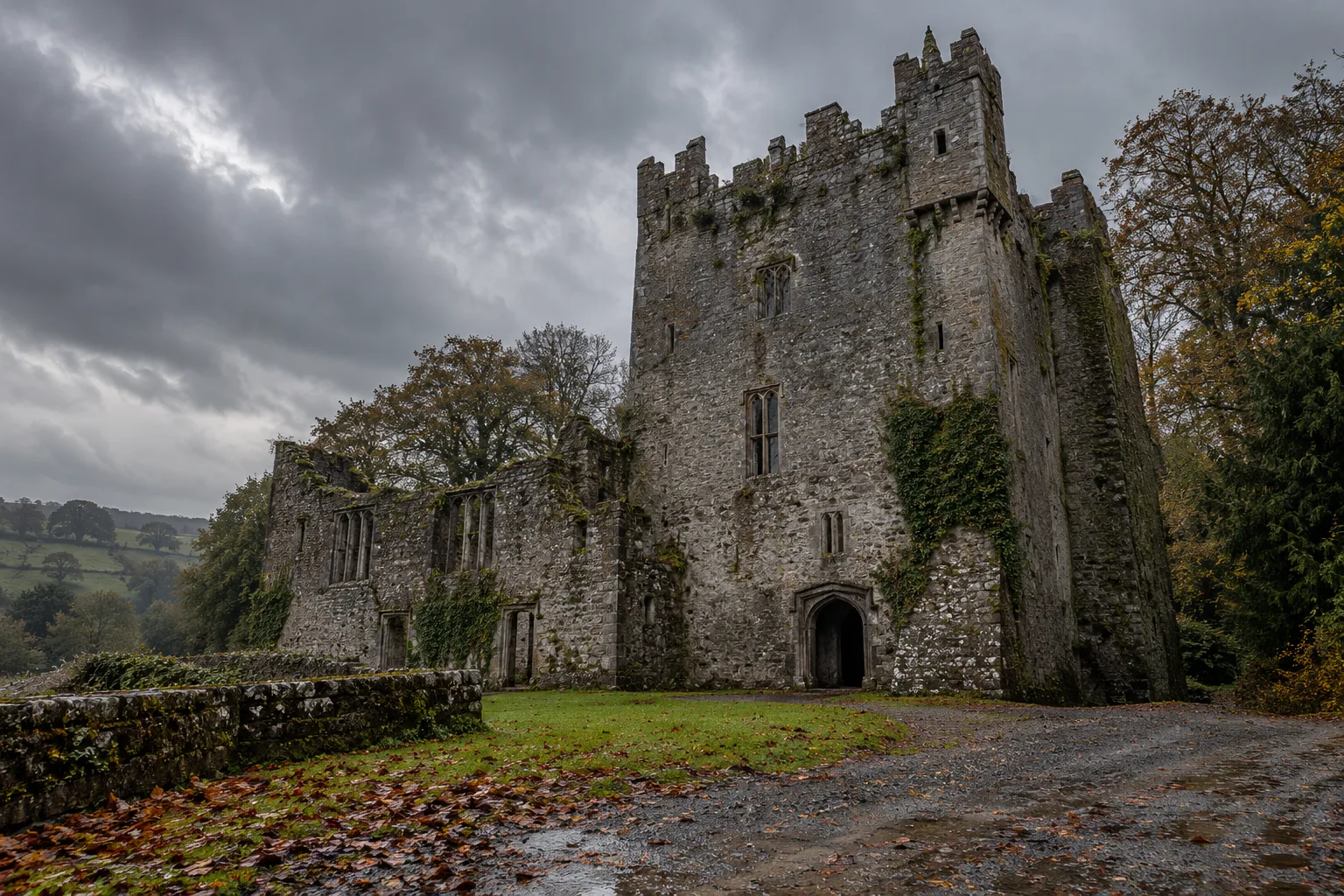
At Leap Castle, the most disturbing part of the ghost story lies above the stairs. A narrow climb leads into a chamber called the Bloody Chapel, where tradition places a killing between brothers. Elsewhere in the same tower, accounts describe an offensive smell and a grey presence known as the Elemental. The building stands in County Offaly, Ireland. Its reputation rests on a mixture of history, family stories and disputed paranormal testimony.
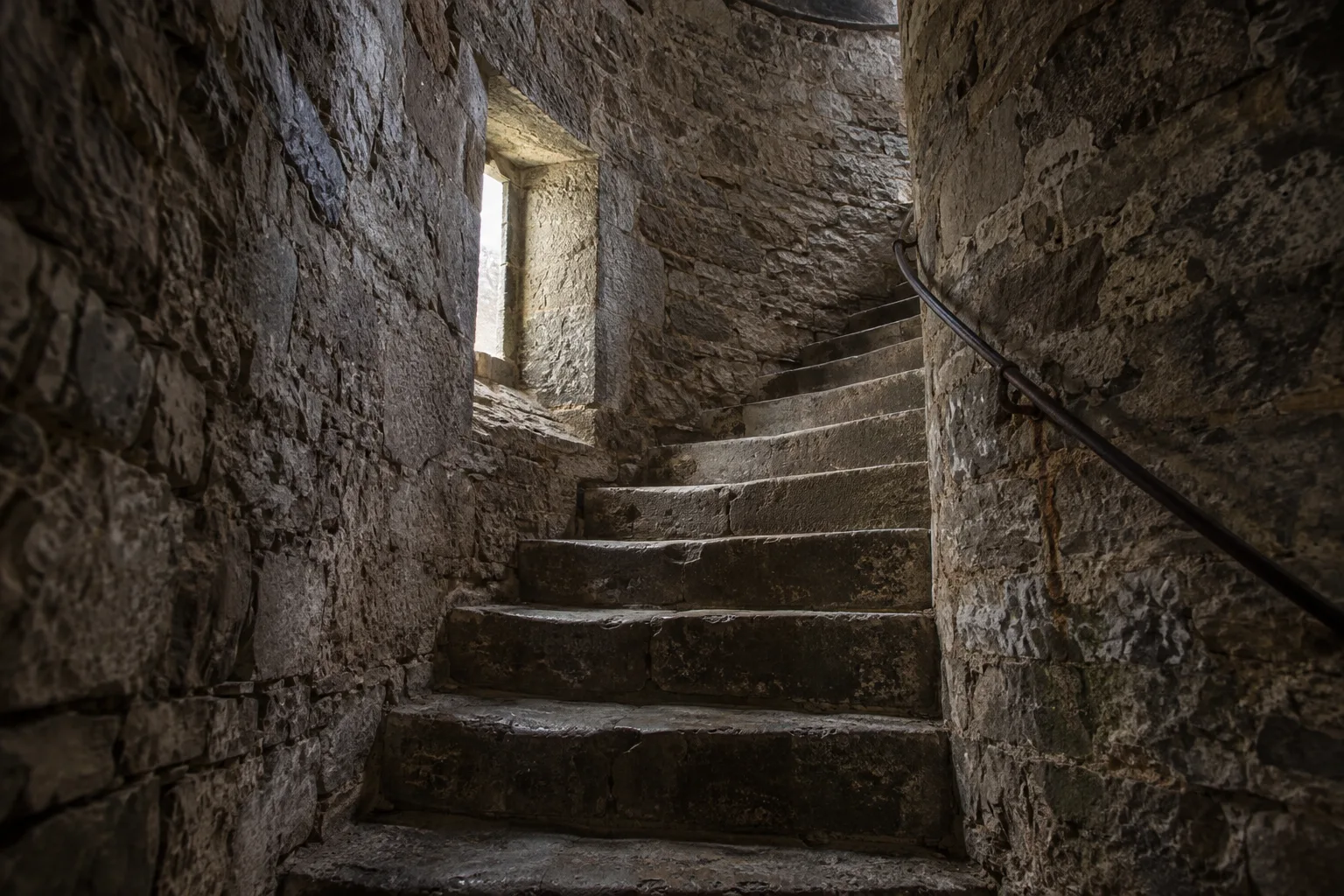
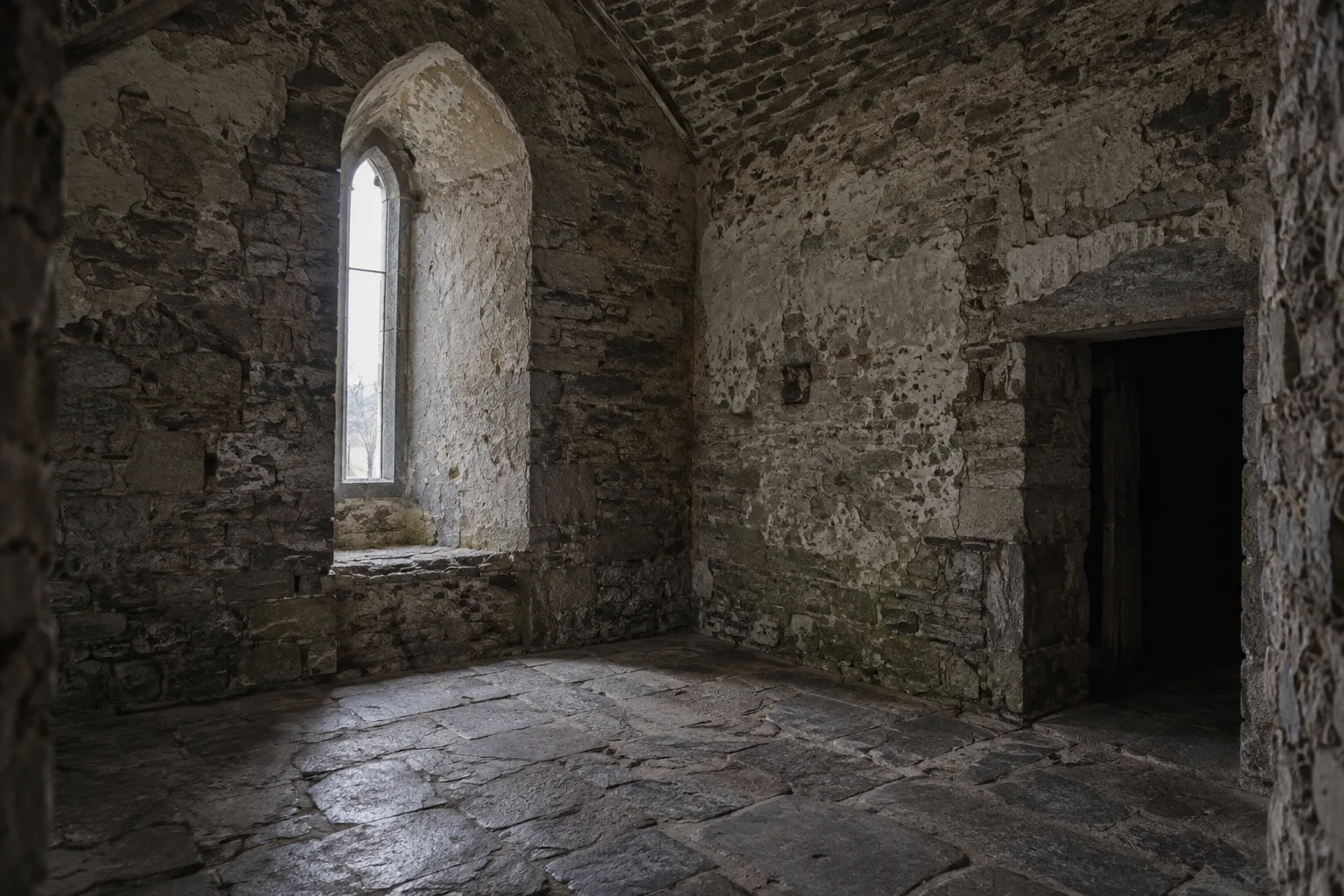
The setting gives those stories an uncomfortable advantage. A stair bends before you can see its landing. A deep window lights the stone around it while leaving the doorway dark. Nothing needs to move for the next room to feel occupied. To understand why Leap Castle has become such an enduring haunted place, follow the rooms first, then examine what people have claimed about them.
In this story
A fortress that became a home
Leap Castle belongs to the landscape of Irish tower houses, fortified residences whose height and thick walls make domestic life inseparable from defence. Its history includes the O’Carroll family, the later Darby household, fire and restoration. Describing it simply as an abandoned castle misses the long story of people living in and rebuilding it.
The independent Leap Castle Archive’s chronology records substantial Darby remodelling from 1753 and the destructive fires of July 1922. It also flags disagreement over the tower’s early dating. That is a useful reason to resist the confident construction year often attached to a ghost story.
There is a separate trace of the fire’s aftermath in Ireland’s architectural record. The National Inventory of Architectural Heritage entry for a Doory Hall building notes that the Darby family lived at Doory Hall in 1923 after their home burned. Those displaced residents belong to a documented past, even when the castle’s supernatural occupants remain a matter of belief.
The killing attached to the Bloody Chapel
Visit Offaly’s account of the local legends tells of two brothers competing for leadership. In its version, one brother, a priest, begins Mass before the other arrives. The latecomer uses that supposed insult as the occasion to kill him at the altar.
It is a story built around the violation of a protected moment. Worship becomes the setting for violence; family becomes the source of danger. The chapel’s name holds that collision in two words. Retold inside a small upper chamber, it leaves little room between the listener and the imagined act.
The archive’s Bloody Chapel record explicitly identifies the priest’s murder narrative as legend and testimony. This article follows that distinction. The story explains the room’s haunted identity, but the sources reviewed do not establish its dialogue, precise sequence or every historical detail as a verified murder record.
The Elemental of Leap Castle
The Elemental is a different kind of fear. It has no securely established identity waiting at the end of a family tree. Visit Offaly describes a reported presence with human and animal features, associated with a smell of decay. It reproduces testimony attributed to Mildred Darby about a grey figure she believed she encountered.
The archive’s Elemental material preserves several explanations for the presence, including occult activity and older protective-spirit traditions. It also acknowledges uncertainty about its origins. These competing accounts should remain competing accounts; combining them would create a more definite creature than the evidence supports.
As a ghost story, its power comes from the disturbance of ordinary recognition. An identifiable historical ghost offers a name and a motive. The Elemental offers an unpleasant sensation followed by something difficult to describe. The listener cannot easily decide what category the threat belongs to, which leaves the uncertainty hanging over the hall.
The hidden chamber and the bones story
Another strand of the Leap Castle tradition centres on a concealed space associated with the chapel, commonly called an oubliette. The chapel archive describes an opening in the room’s north-eastern corner and preserves accounts of confinement and the removal of human remains. It distinguishes those claims from the task of establishing architectural and documentary evidence.
The familiar detail about cartloads of skeletons is a striking example of how a retelling can acquire authority through precision. A number sounds measurable. Yet without a traceable excavation report, an inventory and reliable context, the number alone cannot establish how many people died there, when they died or how their remains arrived.
That limitation should guide the imagery as well as the prose. There is no need to populate Leap Castle with invented bones or recreate a massacre to make a hidden opening disturbing. The idea of a space within a wall, separated from everyday life by a small entrance, already supplies the story with a severe and claustrophobic image.
Someone still has to live with the stories
A Tourism Ireland feature, updated in September 2026, describes a visit hosted by Sean Ryan. Its account moves from an inhabited room, with a fire and assorted chairs, to the stone stairs and upper chamber. The contrast is central to the experience: a home and a haunted reputation occupy the same building.
The feature reports Ryan’s stories about footsteps, moving pictures and named apparitions, alongside his caution about the Elemental’s smell. Those are reported experiences conveyed through a host and travel writer. They give readers a picture of the castle’s storytelling culture without establishing a supernatural cause.
Leap Castle becomes more interesting when its residents are allowed to be people, rather than supporting characters in an endless horror performance. Restoration involves work, decisions and ordinary habitation. A visitor arrives expecting a fright; a household must continue after the visitor leaves.
What would make a haunting convincing?
A building can have a well-supported history and poorly supported claims about a particular night. For Leap Castle, the useful questions concern individual reports: who observed the event, what exactly happened, when was it recorded, and what independent information supports the account? Keep the original room names when comparing accounts. A hall, a gallery and a chapel are different locations; moving an encounter between them can create an impression of corroboration that the original accounts do not supply.
A smell would require an examination of its physical source. A noise would need its location and circumstances established. An image would need an original file and an explanation of how it was made. These questions do not diagnose anyone’s experience from a distance. They describe what would be needed to move from an unsettling report to a persuasive explanation.
The same approach helps with Houska Castle’s gateway-to-hell tradition and the Watcher stories beneath Edinburgh’s South Bridge. Architecture, testimony and later retellings can reinforce each other. They still need to be assessed separately if the reader wants to understand where a reputation comes from.
Before following the stairs yourself
Check current access directly before travelling. Visit Offaly advises arranging visits with castle management in advance. An older travel account or a photograph of an open door is not a booking confirmation, and this article does not establish a fixed October timetable or admission price.
Ask what areas are included and whether the route suits your mobility. Tower-house stairs and uneven surfaces can shape the visit as much as the stories. Follow the host’s directions around openings, dark passages and restricted rooms, and treat the building as a home and historic structure.
There is also value in asking where a particular tale was first recorded. A good account of Leap Castle should leave you with more than a catalogue of spirits. It should make the rooms, the families and the uncertainties easier to understand.
The landing remains out of sight
Leap Castle’s haunted reputation survives through a combination of a real fortress, a violent chapel legend and testimony that resists a single explanation. The Elemental remains an unverified presence in the reporting reviewed here. The castle’s history of residence, destruction and rebuilding gives the stories a substantial setting.
The most enduring image is the climb itself. You can see the stone underfoot, the wall beside your shoulder and the light falling across the next few steps. The landing above remains concealed. The story has already told you what someone else believed was waiting there.
Sources and further reading
- Visit Offaly: Haunted Offaly, local legends and advance-access advice
- Tourism Ireland: a reported visit to Leap Castle
- Leap Castle Archive: historical chronology and dating uncertainties
- Leap Castle Archive: the Bloody Chapel and associated traditions
- Leap Castle Archive: Elemental testimony and interpretations
- National Inventory of Architectural Heritage: Doory Hall building record and the Darby family