
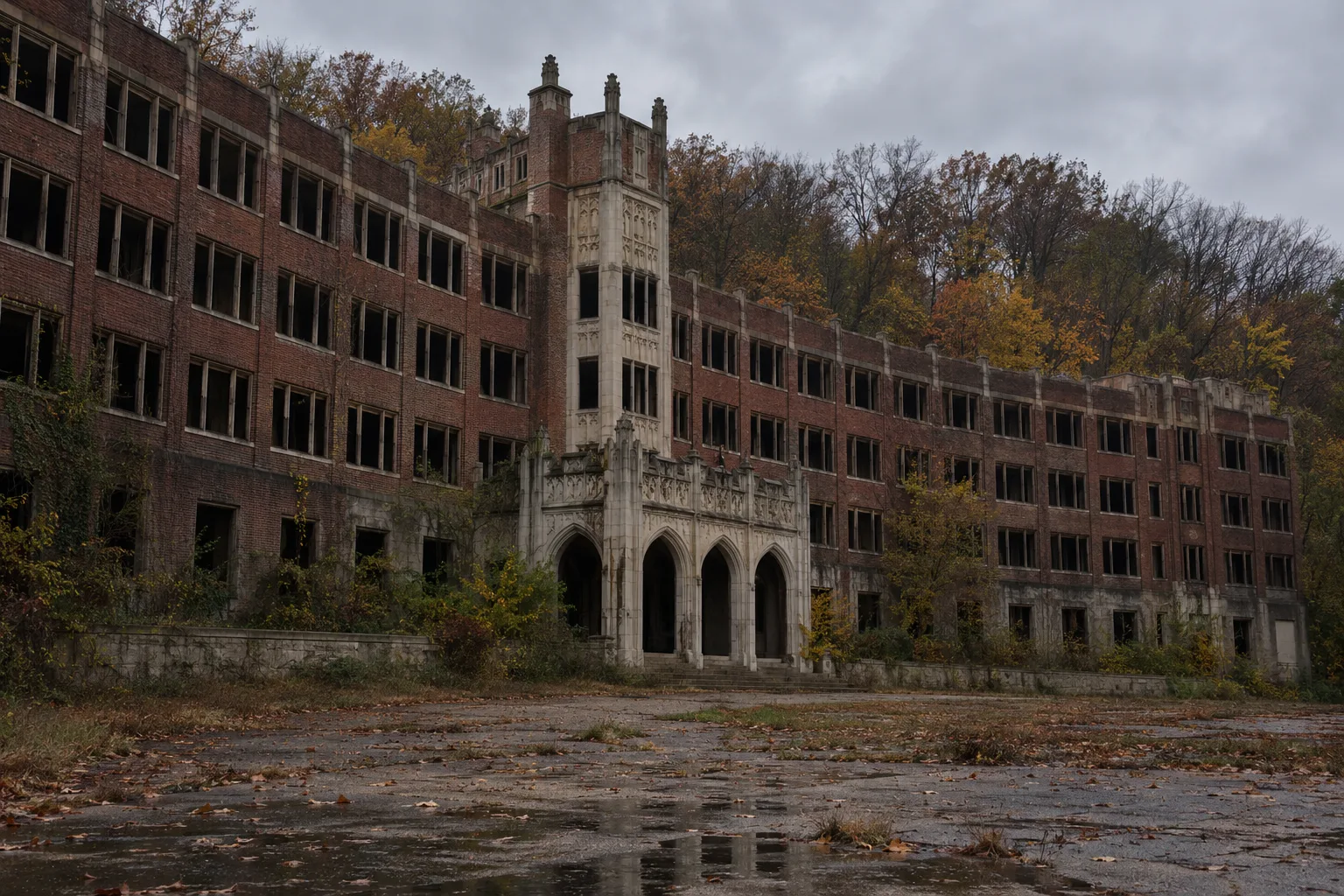
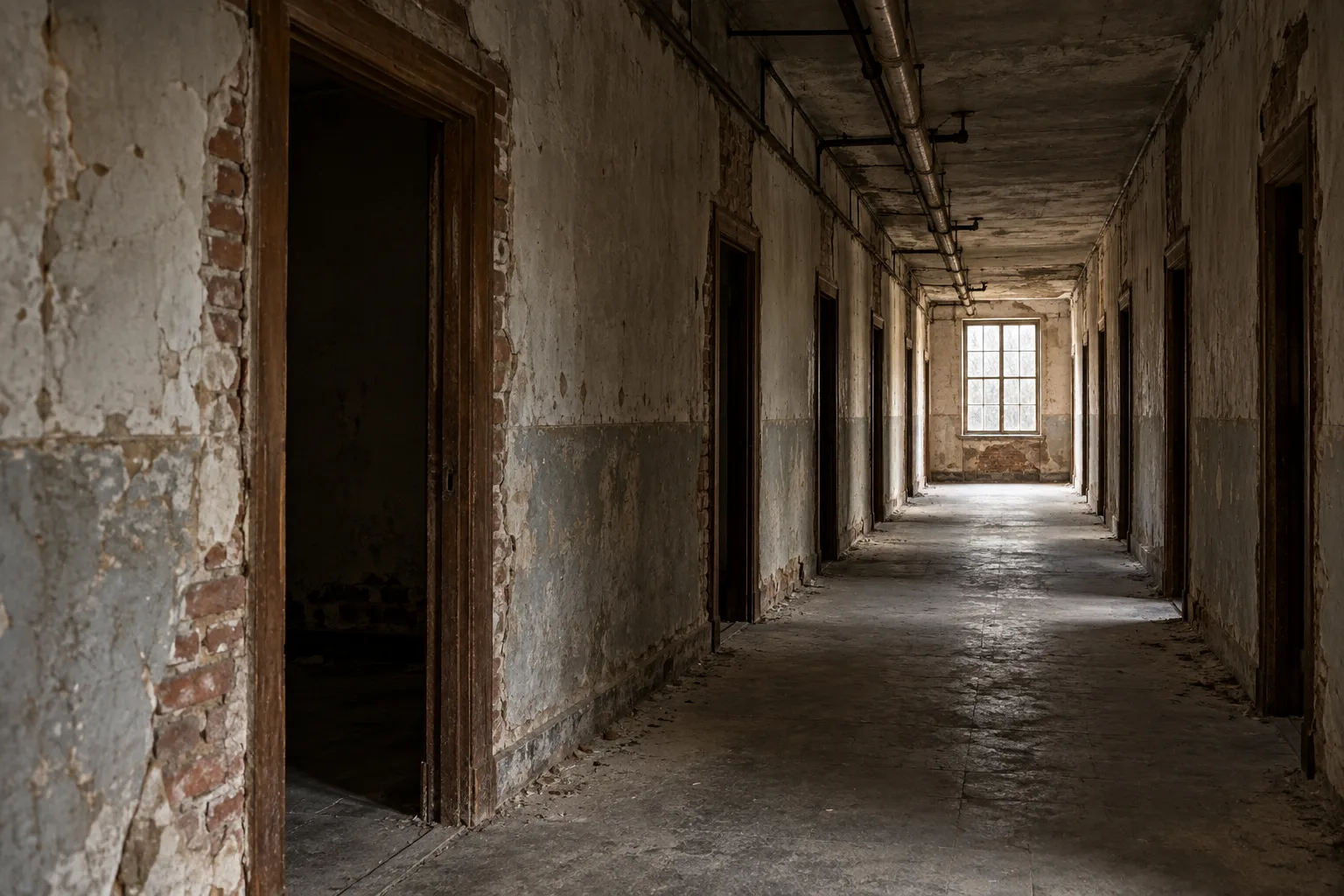
Waverly Hills Sanatorium becomes frightening at the point where its long corridor stops giving you a clear view. Doorways repeat. Daylight reaches one section of the floor and leaves the next room concealed. The Louisville landmark has acquired stories about shadow figures, unexplained noises and a child called Timmy. Behind that reputation stands a former tuberculosis hospital whose main building opened on October 17, 1926.
That makes October 2026 the building’s centenary, a useful moment to examine what survives beneath the ghost stories. The original Waverly Hills hospital opened earlier, in 1910. Its patients, staff and changing medical purpose belong to a documented history. The claim that spirits still occupy the wards remains unverified.
In this story
The hospital came before the haunted reputation
The site’s official history describes a small wooden sanatorium that opened in 1910, followed by the much larger building completed in 1926. The expansion responded to the demand for tuberculosis care. The imposing structure familiar from present-day photographs was part of a public-health response, rather than a building designed to terrify.
Its scale changes how the empty rooms read. A single abandoned bedroom suggests one missing occupant. A hospital corridor asks the visitor to imagine many lives, organised around treatment, meals, work and waiting. Repetition becomes the disturbing detail: another doorway, another window bay, another place where someone once expected a routine to continue.
Waverly Hills needs that distinction between institution and ghost story. Patients were people receiving care, not a ready-made cast of apparitions. Their suffering gives the site human weight, but suffering alone cannot establish that a particular shadow has a supernatural explanation.
Rooms that opened toward the light
Fresh air formed an important part of the sanatorium setting. The Frazier Kentucky History Museum’s account describes the search for a hospital location outside the city and reproduces a University of Louisville archival photograph of patients on a porch in October 1926. The image offers a different starting point from a night-vision investigation: daylight, treatment space and ordinary human presence.
The building itself carries evidence of that institutional purpose. The historic inventory preserved by the National Park Service describes the main structure’s curved plan, brick and stone construction, entrance tower and Gothic-arched porch. It records architecture, rather than a location chosen for a horror film.
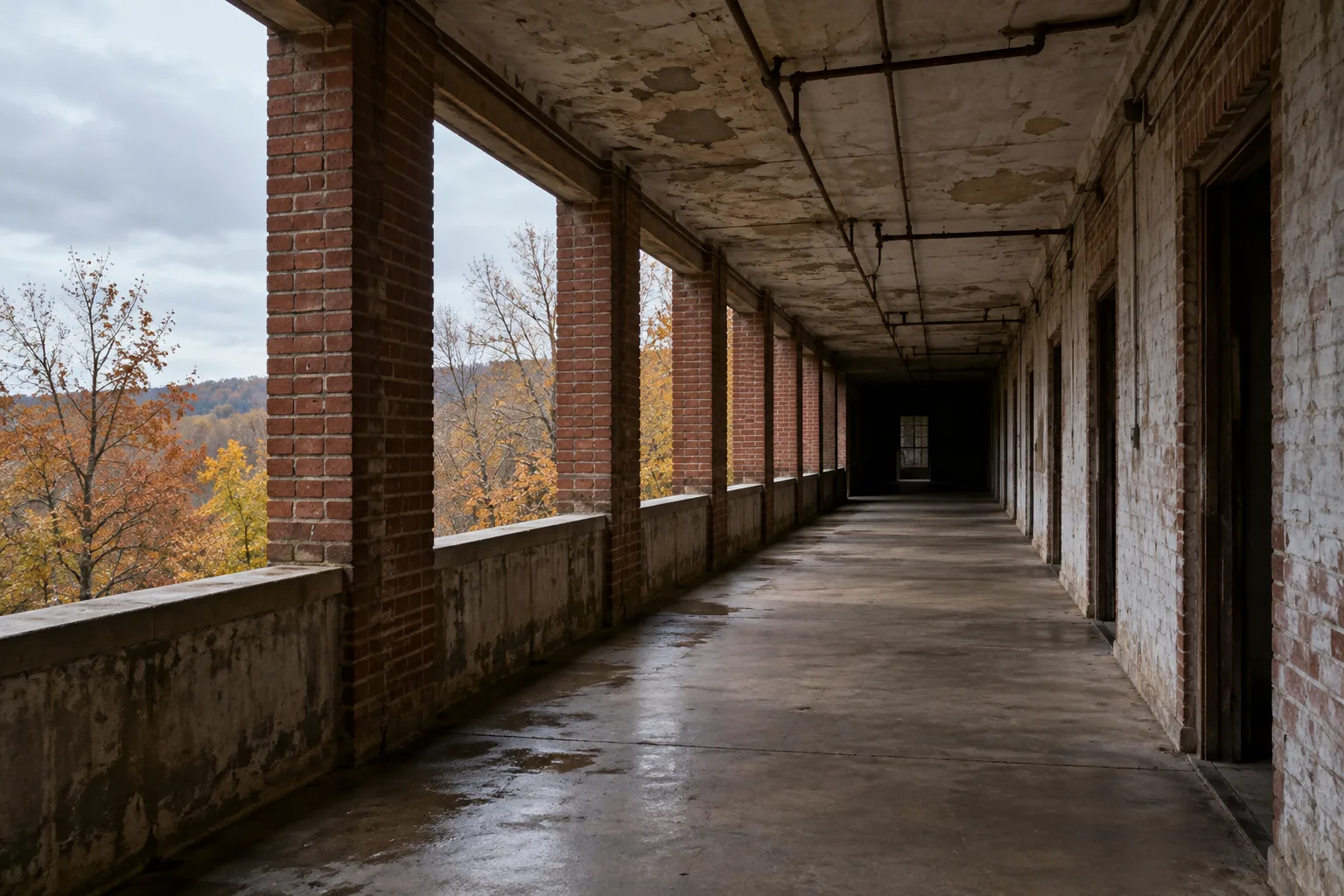
Seen through that history, an open corridor becomes unsettling in a more particular way. The same broad openings that supplied light also leave the eye moving between the visible landscape and the darker rooms behind. When a photograph removes the patients and staff, the treatment building can seem to offer space without reassurance.
The figures reported at Waverly Hills
The operator’s paranormal page recounts reports of shadow people, slamming doors and a man in white. It also describes a purported child spirit called Timmy, associated with playing ball in the corridors. These are the stories promoted and repeated around the site; they are not independently established identities of former patients.
A name can make an ambiguous experience feel familiar very quickly. A noise becomes a child’s game. A pale shape acquires clothing and a direction of travel. Once a visitor has heard the story, an empty passage contains an expectation before anything unusual happens.
The strongest way to tell these accounts is to retain their limits. Someone reporting a figure deserves an accurate account of what they said they saw. That does not authorise adding a patient biography, a cause of death or an invented final moment. Waverly Hills’ history is substantial enough without manufacturing evidence to connect a modern story to a particular person.
Why dramatic death totals need a source
Large numbers circulate around famous haunted hospitals because a total can make a building seem saturated with tragedy. At Waverly Hills, a responsible account should ask what any number actually measures: deaths in one building, across the institution’s history, in a local population, or during a particular period. Those are different claims.
Kentucky Historic Institutions links to a patient death-index project beginning in 1911 and explicitly notes the limits of its access to patient records. An index can help researchers locate a person or a recorded event. It should not be treated as a completed census merely because a frightening total is convenient.
This article does not assign Waverly Hills a grand death toll. The point is not to diminish the loss. It is to avoid turning individual patients into an unsupported statistic. A named record, carefully read, can tell us more than a number copied from one haunted-location summary to the next.
The wards closed, but the building remained
The tuberculosis hospital closed in 1961. The official history connects its declining need with successful antibiotic treatment. The National Park Service inventory records another chapter beginning in 1962, when the buildings were leased to house a centre for elderly residents. Waverly Hills did not pass directly from its first patient to its first ghost hunter.
That change of use matters when interpreting a room. Doors, services and finishes can come from different periods. A photograph of peeling paint does not date the moment a medical department operated there. Nor does a present-day room label, on its own, prove every event later attached to it.
The National Register record, listed in 1983, identifies health and medicine, architecture and social history as areas of significance. The haunted reputation draws attention, but the protected historic interest reaches beyond any particular account of a voice or apparition.
An empty doorway is not an identification
A persuasive investigation would need more than the knowledge that a place has a tragic past. For a recording, the useful material includes the original file, the position of the equipment, who was nearby and what happened before and after the striking moment. For an image, exposure, movement and the source of light all matter.
Those questions do not tell a witness what they experienced. They establish what another person can examine. A brief shape on a screen and a historical patient record are not automatically evidence of the same thing simply because both relate to Waverly Hills.
There is a comparable problem in the haunting accounts at Eastern State Penitentiary, where a strong institutional history coexists with later claims. The reported presence in the Edinburgh Vaults raises a related question about setting and expectation. Reading across these places helps reveal how differently a building’s past and its paranormal reputation can be documented.
Choose the visit you actually want
Use the site’s current booking information before travelling. Its visitor guidance distinguishes historical tours from paranormal investigations, requires reservations and notes that there are no working elevators. Check the arrangements for your particular event, especially during the Halloween period.
The website also contains older seasonal details alongside newer information. Confirm the date and conditions of an available booking rather than treating every line on a general page as a current timetable. This article does not announce a centenary event or guarantee access to any particular floor.
A historical tour can foreground the institution, while an investigation foregrounds the search for unusual experiences. Knowing which you have chosen helps frame the night. In either case, ask for the source behind a precise story, respect restricted spaces and remember that this was a place where people worked and received care.
A century later, the corridor still holds attention
Waverly Hills’ main hospital building reached its hundredth anniversary in October 2026. Its lasting power comes from the scale of the institution, the visible traces of its changing use and the stories visitors bring into its passages. The reported figures remain paranormal claims. The building and its medical history are available for a different kind of investigation.
The unease needs no invented encounter. A corridor offers a succession of openings and only a limited view through each one. The visitor knows the rooms once held people. The next doorway remains dark enough to make that absence difficult to ignore.
Sources and further reading
- Waverly Hills Sanatorium: institutional history and opening dates
- National Park Service: historic inventory and architectural record
- National Register of Historic Places: Waverly Hills listing
- Waverly Hills Sanatorium: operator’s account of reported phenomena
- Kentucky Historic Institutions: history, blueprints and death-index project
- Frazier Kentucky History Museum: local history and archival porch image
- Waverly Hills Sanatorium: visitor requirements